Women’s Healthcare Advocacy: A Conversation on Systemic Challenges and Personal Empowerment
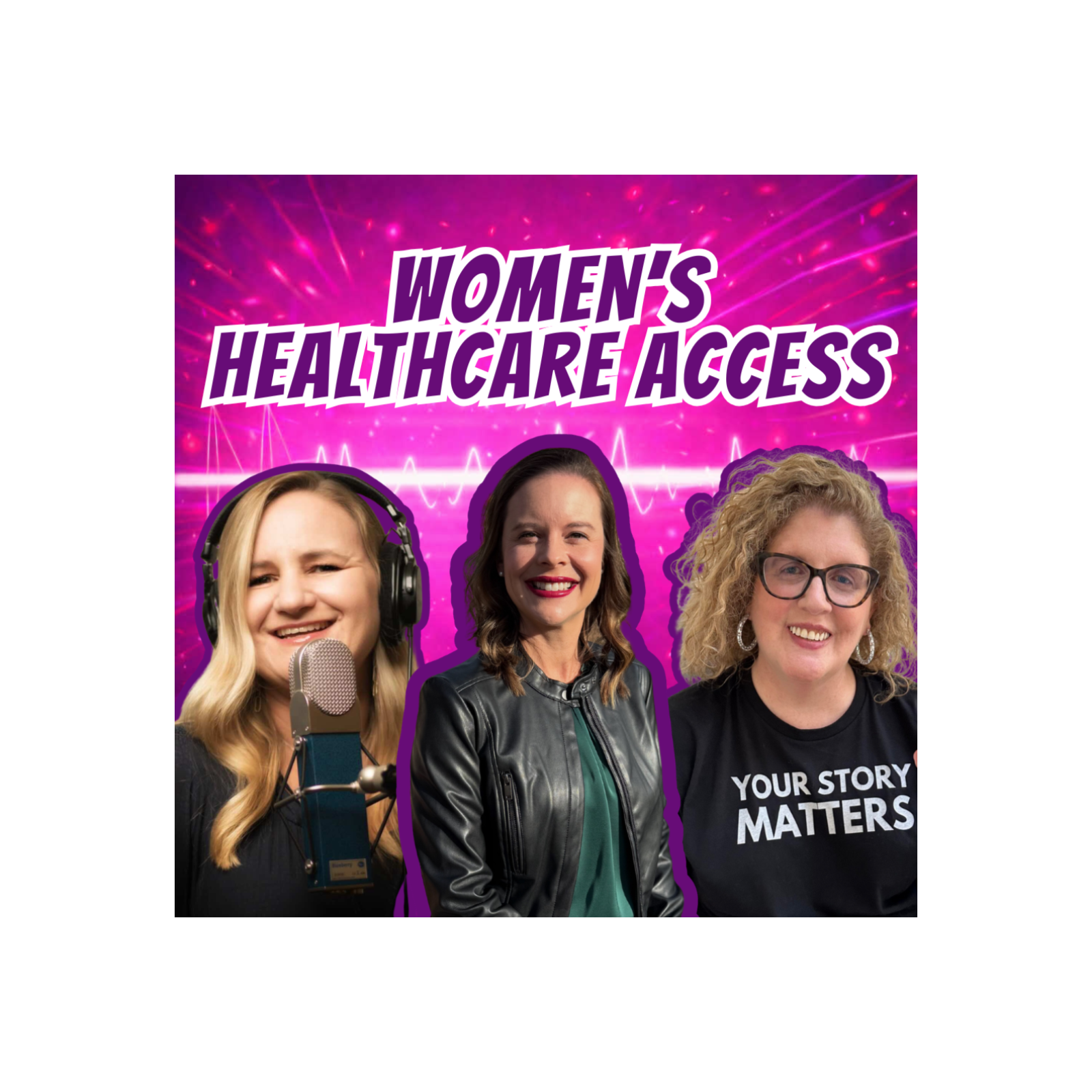
Women’s Healthcare Advocacy: A Conversation on Systemic Challenges and Personal Empowerment. In this episode, we dive deep into women’s health experiences with the healthcare system, discussing common barriers, medical injustices, and ways women can advocate for themselves. Our expert guests share personal stories, insights into systemic issues, and actionable advice for women navigating their health journeys.


Women’s Healthcare Advocacy: A Conversation on Systemic Challenges and Personal Empowerment. In this episode, we dive deep into women’s health experiences with the healthcare system, discussing common barriers, medical injustices, and ways women can advocate for themselves. Our expert guests share personal stories, insights into systemic issues, and actionable advice for women navigating their health journeys.
Main Topics:
- Personal stories highlighting gender bias and dismissiveness in healthcare
- The systemic neglect and underrepresentation of women's health in research and practice
- How women can become effective advocates within the healthcare system
- The importance of community support and shared experiences
- Resources and tools, including AI, for improving personal health management
Connect with our guests:
🎙Connect with your host, Dr. Julie Marty-Pearson
Website - LinkedIn - Instagram - Facebook
Contact your host via Email: julie@podcastyourstorynow.com
Software & Tools I use as a Podcaster & Business Owner
Descript - PodMatch - Podpage - Buzzsprout - RSS.com -
Julie Marty-Pearson (00:25.698)
Welcome to Still Becoming Women Unmuted, the podcast where we speak about topics, the podcast where we discuss topics of interest to women. These topics are explored by women for women in interviews and panel discussions to help women in the
to help women across the world feel more supported. We're diving into topics related to women's health, women's access to healthcare, reproductive rights, human rights, equity, community building for women, and so much more. Today's episode is all about women's health and access to healthcare.
This is a panel discussion where we share some of our own personal experiences, things that we have encountered both as a patient and as a practitioner, and give our advice to women who are currently struggling, and give some advice for women currently struggling with their health, their healthcare system, and how best to advocate.
and how best to advocate for yourself even when your doctors aren't listening. Welcome to Still Becoming Women Unmuted. Enjoy this episode.
I hope you enjoy this episode. Please share it with any woman in your life who might need to hear it too.
Dr. Julie Marty-Pearson (00:01.962)
Hello and welcome to Still Becoming Women Unmuted, the podcast. I am your host, Dr. Julie Marty Pearson, and I am very excited to start this process of sharing these amazing conversations with women who inspire me as both as an individual, but also as an entrepreneur and a podcaster. And so today I am very happy to welcome
Dr. Corey Winn, CEO and founder of Her Quantum Rise, and president and founder of the Carl Edward Foundation. And our other panelist today is Tiphany Kane. She's a business owner, podcaster, former educator, and chronic illness advocate.
She has also been my coach in podcasting and I am very excited to have you both here. Thank you so much for being here. Welcome, Corey and Tiphany.
Tiphany Kane (01:03.351)
Thank you so much.
Dr. Corey Winn (01:03.372)
Thank you for having us.
Dr. Julie Marty-Pearson (01:06.474)
So as I was saying to them before I hit record, the reason I'm creating these panels of women for International Women's Day is because International Women's Day is really focusing on women's equity and equality across the board. And I think this is such a timely and important thing for us as women to do, but also in supporting others, whether they're older, younger or the same age as us, we're all dealing with a lot.
Tiphany Kane (01:23.061)
Mm-hmm.
Dr. Julie Marty-Pearson (01:36.156)
in the world around us. And a lot of it is very specific to women and roles women should or shouldn't have, voices women should or shouldn't use and all of that. So today we're going to talk about women's health, which obviously as all of us being women, we have our own unique experience. But specifically, we want to talk about our experience with the health care system.
Tiphany Kane (02:02.667)
I like how you almost said healthcare system, but.
Dr. Julie Marty-Pearson (02:04.809)
You
Dr. Corey Winn (02:04.886)
Hahahaha
Dr. Julie Marty-Pearson (02:07.433)
It is interesting. Freudian slip there. So before we dive into maybe some of the issues and what we need to work on, let's talk about our own unique experiences. So I'm going to start with Corey. Can you speak to a little bit of your experience both as a practitioner as well as your own health as a woman?
Tiphany Kane (02:10.935)
writing slip.
Dr. Corey Winn (02:32.716)
Of course. So just to give you some background, I'm 41 years old. I've been a physical therapist for about 15 years. And I was just telling these beautiful ladies before we got started recording, I was 32 years old the first time I was told, well, you are getting older. And I thought I had been slapped. My daughter was like a year and a half old. Hormones were still adjusting after nursing and all the things. And I thought,
My hair is falling out. That's not normal. Well, you're getting older. There is no hormone testing. There is no, let's go see a dermatologist or let's make sure nothing's going on. well, you're getting older and out the door they went. And I thought, really? What's older? I mean, in a physical therapy sense, think 70s, 80s, 90s, that's when I start thinking of things and our body's really struggling. But it really hit me.
Around that same time, my mother was diagnosed with breast cancer and she had excellent care. But as she was finishing her treatments, her oncologist said, your daughter needs to go get a baseline mammogram because we need to make sure for one, she's fine right now and that we have something to compare it to for the years and she needs to get one every year. So I went to my doctor. Meanwhile, my mother had breast cancer. My grandmother had breast cancer. My mother's aunt had breast cancer.
all on my mom's side, my dad's sister and one of my cousins on my dad's side had very, very aggressive breast cancer. So all signs point to breast cancer. And when I first went to my doctor to ask for a mammogram, she said, you don't need that, you're too young. And I said, well, my mom's oncologist told me that I needed to come and she said, do you know how much radiation is in a mammogram and how much risk that puts you down the line? And I looked at her like,
Are you serious right now? Years down the line, I've also had women tell me, women physicians tell me, you do know that if you go looking for something, you'll find it, right? And I just remember sitting there thinking, thank God I'm a healthcare professional. Thank God I know how to advocate for myself. Cause I can look at her and say, hell yes, if I find it, then it's early. It hasn't metastasized. It hasn't gone to my brain and to my bones.
Dr. Julie Marty-Pearson (04:43.315)
you
Dr. Corey Winn (04:56.31)
I would much rather go through a potentially unneeded biopsy to find out that it's nothing than to find out that it's something and I could have found it years ago. that's, that's a kind of very blunt, like, are you serious right now? But from the healthcare standpoint, that's why women don't come in. That's why they ignore their symptoms because they are dismissed at every turn.
Tiphany Kane (05:06.966)
Yes.
Dr. Corey Winn (05:26.134)
And if I'm in healthcare and I know how to advocate for the hell out of myself, my cousins who aren't in healthcare are like, Cory, what do we do? Like you find another physician, you find another practitioner. You know, I'm not for everyone. I know that. But find somebody who listens to you and pulls the lid off and says, let's look into that. That's not normal.
Dr. Julie Marty-Pearson (05:50.426)
my gosh, I think Tiphany and I are both are like having triggering experience recall as you're talking. And you know, one of the first things that came to my head as you were talking about that was when I was in sixth grade, I got very sick and they couldn't figure out what was wrong with me. I spent six months going to different doctors and at certain points, the doctors told my parents that I was faking it. I was just attention seeking. There was nothing wrong with me. And I remember my mom.
Tiphany Kane (05:50.646)
Lily.
Tiphany Kane (05:55.755)
you
Dr. Julie Marty-Pearson (06:19.303)
relaying the story again when I was older saying, and I told that doctor, I know my daughter and she doesn't attention seek ever. She never draws more attention to herself than she needs to. I know my daughter and she's not lying. She can't get out of bed. You know, I was sleeping 16 hours at a time. I was in horrendous pain. And so I experienced at a very early age,
that women and girls aren't believed. And I think we see that so much more now, especially today, but it's almost like our healthcare system was created in a way to not actually help us. It's almost like it was created to battle us. And I know...
Dr. Corey Winn (06:51.064)
Mm-hmm.
Tiphany Kane (07:03.647)
Well, it was. It was. We weren't allowed to be part of clinical trials until the 90s. We were expressly left out of clinical trials because our hormones could mess up the trial. So they don't understand women's health at all. At all.
Dr. Corey Winn (07:22.978)
Well, and I just want to say too, we always think of estrogen and progesterone as female hormones and testosterone as a male hormone. Just in case any of our listeners don't know, we both have all three in varying degrees. And it's only been recently that they've really started studying testosterone in women.
and how it has affected so many things as building blocks to other hormones in the body. And as it starts to drop off, I mean, it causes a whole sequelae of other things.
Dr. Julie Marty-Pearson (07:57.694)
Yeah. And you know, it's funny, I saw a reel recently of a man explaining to other men that if we went through the change that women go through, whether it's during their monthly period or peri or menopause, like for a man, the amount of change we deal with hormonally would take a man, he said, 125 years to experience the same change. And I think it was such an important thing that a lot of times
We're compared, but we're not compared as drastically differently as we should be. And I know Tiphany, you have had a lot of experience with this and being told, you know, being ignored, not being listened to. So start off a little bit by sharing your experience in terms of your healthcare system experience.
Tiphany Kane (08:37.207)
Yes.
Tiphany Kane (08:49.237)
In a lot of ways, I'm very fortunate in that the issues I had when I was younger, I was believed and taken care of. And it wasn't until adulthood that I started experiencing this crazy stuff. And I think, know, I'm 52, so I think I've lived that intense change in insurance when before, you know, it was not for profit and you had your family doctor and they knew you.
and they advocated for you and they took time with you. And then in the 90s, everything changed when insurance went for profit. And that's when it's like, okay, now you never see the same doctor and nobody knows anything about you. You don't know your doctor, they don't know you, and suddenly you can't get the care you need. So I was born with anatomical differences in my kidneys.
And when I was young, I had significant health or heart issues. So in my high school years, I did, I was kind of like you, Julie, I slept a lot. I get these awful headaches that made my face swell and my head would get hot. Like you put a cold towel on my head and it would warm up. And we have brain tumors in my family. And so my mom was sure I had a brain tumor.
And it ended up I just had an issue with my heart. I remember thinking, oh, well, that's a big deal. It's not a brain tumor. And it was something meds could handle for a while.
Dr. Corey Winn (10:19.086)
Can we just honor that perspective for a second? my gosh. it's fine. It's just my heart.
Tiphany Kane (10:27.159)
Right, right. And but it was really like my mom was crying telling me, oh, they found this shoe with your heart, blah, blah. And I remember being like, so I just need to take medication, you know, when I'm in high school, and I'm like, I just so I just need to take medication. So he's like, yeah, I'm all okay. That's not a big deal. My cousin had had brain tumor, brain cancer, know, brain surgery and everything. So I'm like, oh, no big deal. So I lived with that for a while until I finally needed surgery in my early 20s. You know, and that was fine. Like I got the care I needed for that.
What we didn't know is all of that time I had anatomical differences in my kidneys that we didn't know about because they don't skin your kidneys normally, right? Like they pay attention to your heart and all of that. it wasn't until I was getting like I had constant UTIs through my whole life and you know, they they attribute that to hygiene and what have you. Of course, I've had like my periods have been
Dr. Corey Winn (11:06.36)
Great.
Dr. Corey Winn (11:20.622)
Of of course, let's not look at it further.
Tiphany Kane (11:24.343)
I also had scarlet fever and rubella as a child. Anyway, I get into my mid to late 30s and I am kidney stone and UTI like misery. And I'm feeling like this doesn't seem normal. Can we look at my kidneys? And we did. And we found that I something called catchy richy disease or...
you know, the kind of layman's terms is medullary spongy kidney, which basically means the insides of your kidneys have a ton of cysts. So it looks like a sponge and then it holds onto fluids. And because it's holding onto fluids, the calcium sits in there and then the calcium turns to stones and you get lots of bacteria buildup. And so you get the UTIs and it in and of itself, that's considered a benign condition because it's not cancerous and you're not going to die, but it does damage your kidneys.
and kidney disease or kidney damage like, and so it is considered a kidney disease and it damages your kidneys. Okay. So that's thirties. Get in pregnancy, all of that. I ended up with pregnancy induced hypertension. and I ended up with hypertension. Don't even though I was running marathons and endurance cycling, like super fit, super everything, 15 years of hypertension. Right. And these last two years,
Dr. Corey Winn (12:17.549)
Right.
Tiphany Kane (12:46.517)
the gaslighting that I've gotten on my hypertension because for some reason, hypertension is treated as almost a moral failure of, well, you must not be eating, right? You must not be exercising. you've gained weight. Even though two years ago I went to my doctor and said, I have gained weight and I can't understand, I'm a very active person. I've always eaten healthy. I've always had heart issues. So I have always eaten very healthy. Like I have really taken care of my body my whole life.
Dr. Corey Winn (12:54.542)
Mm-hmm.
Tiphany Kane (13:15.061)
And that's where the gas lighting began. And it was devastating. Like I've never been treated like this ever. I've had respectful doctor and like I've gotten the care I've needed my whole life. Like what is going on now? Like we have documented, I have heart issues. I have pregnancy induced hypertension. I have documented kidney issues. Like what the hell? Why is suddenly, it's just stress and anxiety.
Dr. Corey Winn (13:43.992)
Yeah, not at all.
Tiphany Kane (13:46.359)
And there's so many times I went in my car and cried. like, anyway, so long story short, these last two years have been very eye-opening as to how horrifically women are treated and how there are certain conditions that are seen as moral failures, personal failures, as well, you're not taking good enough care of yourself. Sorry.
Dr. Julie Marty-Pearson (14:08.147)
Mm-hmm.
Dr. Corey Winn (14:15.138)
I was just talking to a physician the other day who switched her entire career after being an internist to women's health because of similar situations. And she was talking about the risk of when you have preeclampsia or hypertension during pregnancy, it puts you at higher risk to have hypertension later. And it's never talked about. I mean, the things that she was telling me, I was like, I've never heard that before. I've never heard that before.
Tiphany Kane (14:34.635)
Yes. Yes.
Tiphany Kane (14:41.056)
Yes.
Dr. Corey Winn (14:42.188)
and the hormone changes that happened during perimenopause. mean, me personally, I've gained 10 to 12 pounds in the last year and have done nothing different. And like you said, mean, hypertension is very different, but weight gain the same way. It's moral failure. Well, what are you doing? And it's like, I've done the same thing my whole life. Now, am I a perfect eater? Absolutely not. But for that switch to flip and all of a sudden gain weight when nothing's changed,
Tiphany Kane (14:58.113)
Yeah. Yeah.
Dr. Corey Winn (15:12.16)
is very discouraging. And then on the other side of the healthcare system, well, you're getting older. Well, that happens. Well, you turn 40. What? No.
Tiphany Kane (15:14.198)
Yes.
Dr. Julie Marty-Pearson (15:21.769)
Mm-hmm.
Tiphany Kane (15:22.335)
Yeah. Yeah. It's very frustrating. It's very demeaning. And I think the worst part of it is as a person, as a patient, as a human, as a woman, you start gaslighting yourself. And you do start thinking that it is some sort of moral failure on your part. And I just experienced this. I got some blood work back in my cholesterol had gone up and my A1C had gone up. And I'm like,
Like I said, I'm very careful, know, especially I've got, I just had surgery on my kidneys. Like I know I need to be careful and my goal in my life is to preserve and prevent. I can't cure what is going on in my body. It's not curable, but I can preserve and prevent. And that's every time I go to the doctor, I preserve and prevent. Like how do we preserve the function I have now and prevent further damage? And so I eat that way as well. Not perfect. I mean, I love my chocolate.
But, you know, I'm very focused on eating healthy. And so my cholesterol went up. And the shame spiral I went into. What am I doing wrong? What is going on? Why did my A1c go up? Why did my cholesterol go up? You know, and I just talked to, I'm in a clinical trial. So I talked to clinical trial team yesterday and they're like, your body, you just had surgery. Your body's like not metabolizing things correctly right now. We'll check it again, you know, in like six months.
we're not worried about this, it's okay. But my shame spiral, what I put myself through was pretty brutal of like really blaming myself for my cholesterol and A1C going up, which is so unfortunate. Like we've been, we get so mistreated by the medical profession that then we mistreat ourselves.
Dr. Corey Winn (16:51.628)
Mm-hmm. Mm-hmm.
Dr. Corey Winn (17:06.269)
yeah.
Dr. Corey Winn (17:18.85)
When I think too, you, you've been through a lot. So you know how to advocate for yourself. I advocate for myself. mean, my husband gets our interns for our family through his job. And I ended up going to a concierge physician instead because she has training on women's health. And I want to be really clear too, that that's not something that everyone can do. I know that I'm very privileged that I've been able to find this physician to listen to me. And so helping.
Dr. Julie Marty-Pearson (17:18.984)
And I.
Dr. Corey Winn (17:48.674)
give my patients specifically the tools to then go back to their doctors and ask the specific questions. Because when you guys have both have lifelong dealings with the healthcare system, but the general population and general public, they don't know what they don't know. They don't know what to ask. And the doctors, the expert, well, they told me and it's like, no, that doesn't make any sense, but they don't know that. So I think for the purposes of this conversation too is
Tiphany Kane (18:08.759)
Yeah.
Dr. Corey Winn (18:18.58)
if you can do your own research, if you can talk to other people and you know, no, I'm not a fan of Googling your symptoms. We're all gonna die and we all have cancer. I mean, that's where we all end up. But I do think that there's something to be said with AI and with Google and internet research that you can do of like, help me understand this information that was given to me at the doctor so that I can prepare myself later.
Tiphany Kane (18:21.537)
Yes.
Dr. Julie Marty-Pearson (18:48.169)
Yeah, I think so much of this is important because I mean, I've left doctors because I had a rheumatologist I'd been seeing for years and you know, I'm like, well, I'm more tired right now, I'm more this or that. And it's like, you know, well, we can't, there's not really anything we can do. And one time he said to me, he goes, well, you know, looking at your labs for you, this is good. This is, you know, you're consistent. Now, if you were someone else coming in that I didn't know,
Tiphany Kane (19:12.138)
Ugh.
Dr. Julie Marty-Pearson (19:17.095)
I would be like, yeah, you're a really sick person.
Dr. Julie Marty-Pearson (19:22.705)
So I'm just be like, okay, this is my norm and I just have to suck it up and deal with it. Like it's, and I think also because as women, deal with so much more autoimmune issues, issues related to our reproductive cycles. And as we get older and all of that changes that we're dealing with so much more. And then we're just told that's just how life is, deal with it. There's nothing we can do. You're getting older, whatever it is. And it's just.
Tiphany Kane (19:42.582)
Mm-hmm.
Dr. Julie Marty-Pearson (19:52.082)
It's just, think what I've come to is it's just so sad that our healthcare system is not actually about caring for us. It's just putting people through the cycles. And I've been talking to my husband about that recently with our own primary. It's like, I'm just going there to pay the copay and get my refills. Nothing is changing. He even had me on a weight loss medication that now I'm gaining weight on the medication.
Tiphany Kane (19:55.158)
Yes.
Dr. Julie Marty-Pearson (20:18.833)
And when I said to him, go, well, think shouldn't I just stop it? It's not helping. you want to stop it? I'm paying you and paying for this medication and I'm still gaining weight. Why would I? So it's just like, I just sometimes feel like I'm screaming into a void. So what you've both said is so important that unfortunately we have to learn how to advocate for ourselves, but a lot of us can't afford to go outside our insurance as options.
Dr. Corey Winn (20:36.098)
Well...
Tiphany Kane (20:41.985)
Mm-hmm.
Dr. Julie Marty-Pearson (20:48.089)
So what would you say to that, to someone with that kind of experience?
Dr. Corey Winn (20:48.267)
yeah.
Dr. Corey Winn (20:54.732)
I mean, first off, I hear you and I see you because most people are given the confines of their insurance, period. And no, I can't afford that copay, so this is where I am. That's reality for the majority of my patients, the majority of my friends. So I know personally that I'm very privileged and I recognize that. But what I then tell that patient is,
Yes, here are the confines of your insurance, but go onto their website and look at all the doctors you have to choose from because you don't have to sit in the same doctor's office and not get the care that you deserve when there's 500 doctors that are in network with UnitedHealthcare, Blue Cross Blue Shield, or whatever. And sometimes that requires driving and that's not always an option either. So here I am actually in Colorado.
But there are a lot of resources for transportation, for additional medical assistance and whatnot that's not available in other states. So the other thing that I give my patients is those resources. You you have the resources that you have, but you may also qualify for these.
Tiphany Kane (22:03.863)
Mm-hmm.
Tiphany Kane (22:09.025)
Yeah. I was stuck in a system, it's called Kaiser Permanente, where they are the insurer, the provider, the lab, they're all of the things. And that's part of why my care was so bad in these last two years is I was stuck there, right? I come to find out they have their own norms too. And so what would show up as abnormal in a different lab shows up as normal with them.
And so that's where things were so bad. And so sometimes you have to wait until you can switch insurance, which blows my mind that we live in a country where we get to choose once a year who our insurance provider will be. And if we're stuck, we're stuck. And with Kaiser, it's not like, I'm just going to get a second opinion because they all tow the company line and parrot each other. did get a second opinion at one point, nephrology, the specialty, and that my second doctor
seemed absolutely irritated that I was coming in for a second opinion, that I didn't trust the first doctor. What are you going to get different from me? And I just want to let you know I'm very busy and you need to come to me for really important things. And it was like, wow. We have a right as a patient to get a second opinion, third opinion, fourth opinion, we have a right. so what I would say to this as well, I'm going to agree 100 % with everything
Dr. Corey said, and I'm gonna add that you as a patient have the right to meet your healthcare goals. For some of us that is cure, if we have something that can be cured, for some of us it's pain management, for some of us it's prevention, for some of us it's just living the best we can with whatever condition we have.
preserving function. We each have different goals and we deserve for our healthcare provider to ask us what those goals are and to work toward those goals. And you deserve, like if any doctor is rushing you or putting you to the side or, you know, saying, you know, that no, no, no, no, no, you can push back. And if you are stuck, like I was stuck in the Kaiser system.
Dr. Corey Winn (24:19.712)
Absolutely, 100%.
Tiphany Kane (24:38.391)
There are alternatives. I went out and found a clinical trial. And I am so thankful I do believe they saved my life because my hypertension had gotten so out of control. mean, talking about ER at 256 over 127, Like, blood pressure was out of control. They could not control my blood pressure. And finally, I found a clinical trial. And I do believe it saved my life, kept me from having a stroke.
Dr. Corey Winn (24:55.278)
Wow.
Tiphany Kane (25:08.065)
kept me, I was already getting organ damage. You my eyes were damaged, my heart, my kidneys, and the clinical trial saved me. So there's lots of resources out there as well for clinical trials. There's groups out there that will help with advocacy, sometimes just joining a Facebook group and, you know, just being with other people that are experiencing similar things. I caution people to avoid groups that are just like bitch fest groups.
Dr. Corey Winn (25:28.675)
Yeah.
Dr. Corey Winn (25:37.876)
I was just gonna say, find something that's gonna be helpful for you.
Tiphany Kane (25:38.109)
And yeah, right, where they teach you how to advocate, like where maybe, you know, if somebody doesn't have somebody that can go to a doctor's appointment with them, maybe these, you know, you find a group where somebody in your local area will go to a doctor's appointment with you, or at least be FaceTime with you at that doctor's appointment and kind of help be your eyes and ears and another voice in the room. You know, so there's lots of options if you're kind of stuck in the system that you're in to
Dr. Corey Winn (25:55.384)
Right. Yeah.
Tiphany Kane (26:07.563)
try to work it and maintain some sanity and belief in yourself because it is your money, it is your time, it is your body. You are paying this doctor. They need to take care of you.
Dr. Julie Marty-Pearson (26:23.836)
Hmm.
Dr. Corey Winn (26:23.98)
And I want to say to you, like, find somebody in your life that can help advocate for you too. Like if you're, if you're being stuck and as you were talking, I thought of a patient of mine who I, I had very early in my career who I still stay in touch with, but she was injured at work. And so that, you know, female, then you add workers comp to it and dismissed from the beginning, didn't get checked out until like a week later to begin with.
Tiphany Kane (26:46.199)
Ugh.
Dr. Corey Winn (26:53.85)
And she had significant neurological symptoms like spinal cord injury type level symptoms. And they kept saying over and over, that's not what's going on. We haven't found anything. And you were talking about second opinions. I called a doctor out of the area who I had worked with during undergrad and grad school. And I was like, will you look this over, please? And he even said,
Well, do you think that she could be faking it? And I was like, I would bet my license and my career that something is going on here that's been missed. And he was like, okay.
Tiphany Kane (27:35.073)
Why is that the go-to? Why is the faking it the go-to? Why is that?
Dr. Corey Winn (27:38.542)
And so, I mean, this went on for years and she called me a couple of years ago and she said, Cory, they found a lesion on my brain. And not brain cancer, not tumor, but that this original injury likely when she fell, she probably also hit her head. But because her back and everything else hurts so badly, nobody even looked at that.
Tiphany Kane (27:49.335)
Dr. Corey Winn (28:08.118)
And I was just like, I knew, I knew that there were in clinical terms, upper motor neuron symptoms that weren't being explained by anything. And we're talking, I mean, I've been a PT, like I said, for 15 years. This has been going on for probably 13. And I thought, at this point, nothing can be done. But at least neither one of us feel like we're crazy anymore. Like there was finally validation of like,
Dr. Julie Marty-Pearson (28:26.441)
Jesus.
Dr. Julie Marty-Pearson (28:35.401)
Mm.
Dr. Corey Winn (28:37.888)
Okay, that makes sense. That explains everything that's been going on down the
Tiphany Kane (28:43.595)
This is how you know chronic illness world is messed up, is when a patient gets a abnormal scan or lab work back that is scary abnormal and they're like, it's such a relief, it's so validating. It's like anybody else would be crying over this, but we're like, my God, see, I'm not lying, I didn't make it up. It's true, I've been feeling this. That's effing messed up.
Dr. Julie Marty-Pearson (28:57.801)
Yep.
Dr. Corey Winn (28:59.342)
Yeah, yes.
Dr. Corey Winn (29:06.531)
Right!
Dr. Corey Winn (29:10.41)
Yeah, yeah. And to speak a little bit more to women's health, was telling, we were talking before we started recording, that OB-GYNs who are arguably women's health experts through at least early pregnancy and early women's health, only receive six, or only 6 % of them receive women's health education on perimenopause and menopause and hormonal changes in later in life. 6%.
of the specialist who are supposed to know. So extrapolate that to your typical family physician. And I want to also be really clear, like I'm not trying to throw anybody under the bus. It's not that they don't care or that they don't know, but it's not given to them. And everything is thrown at them from every angle as well. It's like for a lot of people, oh my gosh, one more thing I've got to remember. And a lot of my physician friends see 30, 40 patients a day.
Tiphany Kane (30:04.961)
Mm-hmm.
Dr. Julie Marty-Pearson (30:05.385)
Thanks.
Tiphany Kane (30:09.099)
Mm-hmm. Mm-hmm.
Dr. Corey Winn (30:09.742)
every 15 minutes, whatever that adds up to in a day or more than that. And it's like, you can't keep track of that person or when you saw them last, especially if they're only coming in once a year. They've seen 5,000 patients since then.
Dr. Julie Marty-Pearson (30:09.841)
I know.
Dr. Julie Marty-Pearson (30:27.097)
I think this is an important point to make is, we're not condemning all providers. You know, this system is set up for failure for both the patient and the doctor because the system is set up to not train them fully in the ways they should be. And I even saw this, you know, my career before was in higher education and one of the schools I worked at was a graduate school for pharmacists and they were creating a medical school. And
We, you you realize how little of their training is about how to talk to patients, how to communicate, how to support them, how to, you know, so even not even having all the training on the topics they need, but they're not even trained on how to be a good provider, how to be a good doctor or whatever it is. And so we're dealing with a system that's stacked against us from both perspectives. And, you know, I also want to say going back. Right.
Tiphany Kane (30:57.431)
and
Tiphany Kane (31:08.791)
Yeah.
Tiphany Kane (31:16.439)
And add into that insurance like insurance
Dr. Julie Marty-Pearson (31:21.427)
where they just deny things outright. Like, one of the things I've seen a lot of recently is there's been many celebrity deaths and it's caused a lot of communication around one, early screening and how hard it is to get early screening. And the other side of that is they're seeing these famous people like James Van Der Beek and Eric Dane die from horrible diseases and they're having GoFundMe set up and people are so...
upset. How dare they ask us for money? They're rich. They have this. It's like, no, I just read a story where Eric Dane's insurance denied him round the clock care. So his family and friends had to be the ones caring for him up into his passing. And
Tiphany Kane (32:05.111)
So gross.
Dr. Corey Winn (32:05.376)
And let's be just for that for one second. Most insurances don't cover that. In Colorado, Colorado Medicaid allows for some of those things. But unless you have long term care insurance or like investments and annuities for that specific purpose, your typical Kaiser, Blue Cross Blue Shield, Anthem, whatever it is, they don't cover that. They don't cover respite care or caregiver assistance. It's all out of pocket.
Dr. Julie Marty-Pearson (32:34.033)
And what I'm seeing is people don't have empathy for other people unless they've been through it. And how sad is that? I mean, that's a big part of our world problems, right? But the other side of that is we shouldn't have to go through losing someone to realize what we don't have access to. And that it's about people realizing now, even when they're healthy, what you need to prepare for, because you're not going to get it from what you think you will.
Tiphany Kane (32:40.225)
Yeah.
Dr. Julie Marty-Pearson (33:02.035)
whether it be insurance or the government. And it's so sad that we're having to do this, but I think it's really coming up in conversation of like, how do we prepare ourselves and how do we prepare our families in case of emergency or something happening that we're not expecting?
Tiphany Kane (33:18.783)
If there's one thing we're all guaranteed, it's that at some point we will all be disabled. Even if it's you're 85 and needing a walker and your vision and your hearing are impaired. At some point, it may happen when you're older, it may happen when you're younger, but at some point, your quality of life will diminish. Unless miraculously you die in your sleep when you've lived very healthy and suddenly you in your sleep.
Dr. Corey Winn (33:19.214)
Well, and I, go ahead.
Tiphany Kane (33:47.143)
It doesn't happen for too many of us. And the fact that our society is not built to support that, that somehow, yeah, it's crazy. And it's somehow it's again, a moral failing if you are disabled. And it is something that people like, we can't look at it. know, somehow it's not attractive enough to look at. And therefore we can't really deal with it.
Dr. Corey Winn (33:55.128)
That's the exact reason I have my foundation, to cover the things that insurance doesn't cover.
Dr. Julie Marty-Pearson (34:02.857)
Mm-hmm.
Tiphany Kane (34:15.633)
and they're a drain on our society. These people that rely on wheelchairs or feeding tubes or round the clock care, they're a drain on our society. They're not giving back to our society in any way. They're draining the system of money, blah, blah, blah, blah, which is so incredibly, A, not true, B, human dignity. Like everybody deserves that, and C,
What's draining our society are the big fat cats getting billions at spending $50 million on a wedding, your grandparent that needs round the clock care or Eric Dane who for ALS needs around the clock care or James Van Der Beek.
Dr. Julie Marty-Pearson (34:51.464)
Right.
Dr. Corey Winn (35:02.958)
When you think about those diagnoses, those are million dollar diagnoses over the lifetime. And ALS is over a very quick amount of time because a lot of times you're talking diagnosis to death in less than five years. I mean, and I had a patient years ago who had an ALS diagnosis and she came in originally with back pain and foot drop. And I'm looking at her and I'm like watching her get weaker. And I finally looked at her and I was like, I mean, it was only like three.
three sessions in and I said, something's wrong. I don't know what it is, but you need a second opinion because something's wrong. And she had ALS and she was dead in like six weeks. And I thought, my gosh. And for her particular case, it was very quick. But for somebody who was active and played tennis every day and ate well to all of a sudden have foot drop and have no imaging,
that made sense as to why she was having a foot drop, but that should have been a red flag to all of us. All of us.
Dr. Julie Marty-Pearson (36:09.095)
When I, as you're saying this, I'm thinking about my own family and things I see and being worried when something changes, whether it's my family or my husband's family. It's like, I hate that we live in this like, God, something's wrong or something's going to happen. Or, and you know, I have a different perspective because I had a father who was much older and he lived to be 94 and a half. And it wasn't really until the last couple of years of his life where he had to have help doing things. But I remember how frustrated he was.
Tiphany Kane (36:29.428)
wow.
Dr. Julie Marty-Pearson (36:38.353)
and how hard it was for him to accept health. know, to accept his body was changing and he couldn't do the things he's always done and he had to have people there. you know, my mom recently said they spent $20,000 in the last couple of years of his life just paying for extra help for when she was still working. And it wasn't that he had anything like ALS. He was, you know, 93. He had to be on a walker. He had health issues with his heart. And, you know, he wasn't really, really sick.
Tiphany Kane (36:57.879)
Wow.
Dr. Julie Marty-Pearson (37:07.837)
right? And it still took my parents that amount of money to have care for him when she had to still be working full time. And I say that to
Dr. Corey Winn (37:15.96)
When you think about just having that care, keep somebody from falling, keep something from breaking their hip that then they have to be hospitalized for. That can sometimes be a terminal event in the elderly population. And I mean, from the beginning of being in healthcare, it's like, if we paid for preventative care and paid for access early on,
Tiphany Kane (37:21.151)
Mm-hmm.
Mm-hmm.
Dr. Corey Winn (37:41.026)
the millions and millions of dollars that are taken out because we have a fall in a broken hip or because of a stroke from an untreated hypertension, it would be completely different. But we're such a society of keep them from dying, not prevent this from happening.
Tiphany Kane (37:59.223)
Yeah. Yeah. Yeah. You know, your numbers are a little elevated, but you're fine. Come back when you can't function, you know, like when you're passing out all the time. Then we'll talk. like, I don't want to get there. Don't want to get there, okay?
Dr. Julie Marty-Pearson (38:01.575)
Wait until something's wrong and then we'll worry about it.
Mm-hmm.
Dr. Corey Winn (38:14.968)
Yeah.
Dr. Julie Marty-Pearson (38:15.355)
Well, and I think it's so much in women's health because I remember, you know, when we were discussing my options in my late thirties about a hysterectomy and they wanted me to do an ablation at first because, know, was quicker, less invasive, whatever the excuses were. And it was like, but I'm missing work. I had to leave jobs because of health multiple times in my life and go off on disability for different reasons.
And it got to the point where I left my last job. I had to leave because I'd taken too much time off. I just couldn't do the job. And then I said, I'm off work now. We're going to do the hysterectomy. Why would I go do that if ultimately you think the other is going to have to happen? And I have kidney disease and doing multiple surgery is worse on that. there's this, we have to fight for it. And we see it a lot. And this is a whole other conversation about women's reproductive health and fighting for what we need.
whether it be diagnosis or treatment. But I think that sometimes we question our own sanity. Well, they're the provider, they're telling us this. So I need to do this first and then I'll get the other. And I know we're coming to the close of our time together and we could probably talk for hours. But for anyone listening, any woman who is having symptoms she doesn't understand, who hasn't gotten the treatment she thinks she deserves,
who is just feeling alone and unsupported in terms of her health and her healthcare, what is something that each of you would want to leave with her or say to her right now?
Tiphany Kane (39:51.735)
I have two things. One, you are not alone. Do a quick social media search, whatever platform you're on, and you are going to find people talking about it. I started sharing my story on Instagram because I was so frustrated and I found other people sharing their story and it helped me so much that I'm like, I'm going to talk about it too. I've been, you know, like there's people out there talking about it and sharing their story.
Dr. Corey Winn (39:58.572)
Yep.
Tiphany Kane (40:21.227)
A, you're not alone. And then B, there are so many good AI tools out there that are specifically trained to medical information that give you really good talking points for your doctor. You can put your lab work in, you can put your scans in, and it will say, here's the patterns we're seeing. These are the questions to ask your doctor about.
These are the scans, lab work that might be helpful for you. And so it's not taking the place of your doctor, but it's giving you the talking points and looking at your information and going to your doctor. Now, some doctors are like, my God, you Google your stuff, but they're not the right doctor. But going to your doctor and having those talking points and saying, I saw
you know, these patterns X, Y, Z, what do we do next is super helpful because that doctor looked at your information 10 seconds before they got in the room with you or they're looking at it while they're in the room with you or they may not even look at it. They may not have it. Yeah. So AI tools to me use them. They are a gift, whether it's chat GPT, which is not going to be the most accurate or something like I use Lotus Health. There's so many of them out there.
Dr. Corey Winn (41:29.43)
Or they don't have it. Or they don't have it.
Tiphany Kane (41:46.177)
that are trained for medical, looking at medical stuff, they use PubMed and research information, you know, they use medical research as their basis. I would say lean into that. Okay, I've done a lot of talking.
Dr. Corey Winn (42:03.286)
No, I agree. I second all of that. The only other thing that I would recommend is be visible yourself in your own community. Like my mom, my mom, my daughter's 10. So there's a lot of moms my age, a little bit younger, a little bit older, talk to them. And I remember feeling so alone when my daughter was little thinking the things that she was going through, that she was the only one that that the things that I was feeling that I was the only one.
Dr. Julie Marty-Pearson (42:03.293)
That's great. I will link that in the I will link that in the show notes.
Dr. Corey Winn (42:32.524)
And I was afraid to say anything because to quote Tiphany of moral failure, I've clearly done something wrong here. What, you know, I'm going to figure out this on my own. Stop that. Stop that. Talk to your friends. Talk to your colleagues at work. Talk to the people around you because you will very quickly find that you're not alone. Just like you said, search social media, but that also gives you the opportunity to then say, okay, well hold on. You have a doctor who's listening to you. Can you share that?
you know, are they taking new patients? Can you connect me with them? Absolutely. I have connected so many other women with my nurse practitioner because she has that education. She has that training and she listens. And the same, you know, and it's not that there aren't doctors who take insurance that don't do that too. But the more you can find out what the resources are in your immediate community, the greater access you have, the easier you can get there.
Maybe you don't have to take quite as much time off work because you don't have to drive three hours to get there. talk to your friends.
Dr. Julie Marty-Pearson (43:40.818)
Yeah, I think that's really important advice. It made me think of a time where I've dealt with some really bad things with dental issues and I didn't know anyone that had ever dealt with it. And I was talking to a friend who didn't have the same issues, but had to have an implant. And she referred me to her dentist and it was the first dentist that looked me in the eye and told me, like, I am sorry you are suffering. I am sorry you're going through this. I am going to help you.
And if I hadn't been told by her to go there, I don't know where I would have ended up in the journey of all of that part of my health. And it was probably going to kill me if I hadn't done something because of the severity of it and the amount of infection I had. so you say that just really made me realize like, yeah, you've got to talk to people. You got to, even if you have friends that blow you off, living with chronic illness is not easy. Other people, if they can't see it, they don't believe it. But
it is about sharing your story on social in your community with the people you trust because there are other people out there. There are other women out there dealing with it or have dealt with it and they may be to share something with you that's going to change everything. And so I think all of your advice is great. And I hope that everyone listening got something from this, this process of us sharing, because I know so many women.
are alone suffering and feeling like there's no options for them. So I will put all of our information in the show notes. You can reach out to Tiphany, you can reach out to Corey if you have questions or you just want to connect with them. And I just want to thank both of you so much for being here. I know how busy you both are. I appreciate you sharing some of your own personal experience as well as some really great advice with our listeners.
Dr. Corey Winn (45:26.702)
Thank you for having us.
Tiphany Kane (45:27.191)
Thank you. Thank you so much. This has been a great conversation.
Dr. Julie Marty-Pearson (45:31.547)
Absolutely. Thank you all for listening and there will be another panel releasing very soon.