Women’s Chronic Illness: From Silence to Power
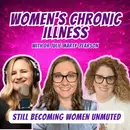
Women’s Chronic Illness: From Silence to Power. Why Women’s Pain is Still Disbelieved and How to Change it.


Breaking the Silence on Women’s Chronic Illness with Melissa Reich & Tiphany Kane
In this episode, women with lived experiences of chronic illness share raw insights into navigating invisible health challenges, advocating for themselves, and confronting systemic biases in healthcare. We discuss the mental toll of chronic conditions, the importance of community support, and strategies for self-advocacy. This episode underscores the importance of voice, community, and systemic change in transforming women’s healthcare and personal well-being.
Key topics:
-The emotional and physical realities of living with chronic illness
-The impact of medical gaslighting and dismissive healthcare practices on women
-Strategies for effective self-advocacy
-Personal stories of navigating medical trauma, treatments, and life-changing surgeries.
-The role of social media, support groups, and community in healing and advocacy.
Connect with the Guests:
Melissa Reich - Instagram Facebook Podcast
Tiphany Kane - Instagram Facebook Podcast
🎙Connect with your host, Dr. Julie Marty-Pearson
Website - https://www.juliemartypearson.com/
Podcast Your Story Podcast - https://www.podcastyourstorynow.com/
LinkedIn - https://www.linkedin.com/in/julie-r-marty-pearson-psyd
Instagram - https://instagram.com/podcastyourstorynow
Facebook - https://www.facebook.com/jmartypearson
Software & Tools
Descript - https://www.podcastyourstorynow.com/descript
PodMatch - https://www.podcastyourstorynow.com/podmatch
Podpage - https://www.podcastyourstorynow.com/podpage
Buzzsprout - https://www.podcastyourstorynow.com/buzzsprout
RSS.com - https://www.podcastyourstorynow.com/rss.com
🎤 Join the Membership: https://www.juliemartypearson.com/community
Julie Marty Pearson (0:05): Welcome to a brand new episode of Still Becoming Women Unmuted. I am your host, Doctor. Julie Marti Pearson, and I am super excited even though this is a heavy topic. I know I have two people here to discuss it with me that we can also bring levity to it, but I find inspiration and support just by following each of them. So welcome to the podcast, Tiffany and Melissa.
Tiphany Kane (0:31): Yay. So happy to be here. And yes, we've got to mix humor with the pain.
Melissa Reich (0:37): Thank goodness. Thanks so much for having me. Thank you.
Julie Marty Pearson (0:40): So I want to start off with this. We all three have dealt with chronic illness in different shapes and forms for most of our lives. I know we all dealt with things as kids, as young teenagers, but I want to start with this. When you hear the label, the topic chronic illness, what does that bring to you? What does that trigger or what does that mean to you?
Julie Marty Pearson (1:06): Melissa, you want to go first?
Melissa Reich (1:07): Sure. What it means to me from my lived experience, like I say that I get to be a professional and a patient. So I'm a therapist, but I'm also someone who has my own mental and physical health challenges. So I have my own experiences with myself and people that I've seen. And I feel that chronically ill folks, there's a disproportionately higher number of women.
Melissa Reich (1:32): And there usually tends to accompany some sort of struggle to, you know, certain dynamics maybe that we're forced into or traumas that we experience. And while they're very real issues, I kind of think of it as a term that can almost get weaponized or used to, you know, make women seem like we're complaining or we just have anxiety or things like that. And so, you know, that tips my, you know, tips my hand a little bit in terms of some of my sad chat shared experience with it. But that's, those are kind of some of the thoughts that come to my mind.
Unknown Speaker (2:10): Yeah,
Julie Marty Pearson (2:10): absolutely. And I think that's why I said triggers. Cause I think sometimes when we hear that word, it triggers things we've been called or labeled or brushed aside because of some kind of chronic issue we face.
Tiphany Kane (2:23): Yes. I'm going to agree and add to it that in the past, to me, chronic illness held shame and like hit not hid, but like tried to live my life to look as outwardly healthy as possible because my husband at the time, my parents, my whoever, like, being sick was shameful and, something to you know, like, it was a bad thing. Right? Like, you were attention seeking or what have you. But lately, what I love about the social media community is, like, the taking ownership of hashtag chronic illness and, like, wearing it like a badge of I'm a warrior.
Tiphany Kane (3:08): Like I have made it through some really, really tough stuff and I am really strong and my mental fortitude and my physical fortitude, the stuff that I have to handle every single day to make it through the day is pretty bad ass. And so, hell yeah, hashtag chronic illness. Chronic means it's not gonna go away. It's not like we're gonna ever have a day where we don't have this particular issue. It and what we are trying to do is live the best life we possibly can every single day, and it changes every day, based on what's happening in our body.
Tiphany Kane (3:50): And it's pretty freaking amazing, the lives these people, especially, I mean, it is predominantly women, but that these women live with chronic illness and what they are able to do in bodies that hurt.
Julie Marty Pearson (4:09): Yes. You know, it's so funny. As you were talking, something came to mind. I remember having a conversation with a friend of my mom's one day. And a lot of times I've heard at different points, well, looking at you, I can't imagine that's how sick you are.
Julie Marty Pearson (4:22): You have these issues or whatever. But there was something I remember saying to her that there've been points in my life that I've thought, if my body could have kept up with my brain, I probably would have been the president of The United States. Like, there's this idea of us feeling trapped Yep. And stuck Yep. And not being able to do things, whatever that could be career wise, education wise.
Julie Marty Pearson (4:47): Mean, there's a reason that I went through several versions of my doctor program because I had, I actually took a year longer than my cohort because I had to take two breaks, one for a cert for two different surgeries during my program. And that doesn't mean I didn't get there, but there were times where it was like, I thought, why? And I know that happens to us. Why me? Why can't I just do what I wanna do?
Julie Marty Pearson (5:10): But this also brings up this idea of the invisible illness, the invisible chronic illness. And I'm sure you both have dealt with that.
Unknown Speaker (5:17): Yes.
Julie Marty Pearson (5:18): So, I mean, we're talking about it in a way we want other people to understand how we feel, but I think we also want other women out there to be like, you're not alone. We see you and we understand you and your struggles.
Melissa Reich (5:34): I have to Tiffany, one of the things that you just said, and I giggled a little bit because candidly I use, you know, living the way that I live. I dark humor. I use dark humor. I appreciate it, but sometimes it's inappropriate. But when you said about the chronic inappropriate.
Melissa Reich (5:52): Well then you would love me. So when you talked about it being chronic meaning forever, I giggled because I rarely will post about like on my page. I have a very different, I don't talk about my health issues as much because I'm like a therapist who covers pop culture, whatever. And people don't want to hear about it. And in fact, every time I talk about my health issues, I lose followers, which is really interesting.
Unknown Speaker (6:18): That's ridiculous.
Melissa Reich (6:19): The other day I posted about like chronic incurable cancer and just really struggling. And there were so many, I hope you feel better soon comments. And I just like, I knew that they were so well intentioned. Yeah. But I just wanted to be like, thanks.
Unknown Speaker (6:38): I won't ever because that's what this chronic thing is. I'll literally never feel better. I'll literally never feel better.
Unknown Speaker (6:49): That's a shirt. Maybe the shirt and the mug. I'll literally never
Julie Marty Pearson (6:52): It feel could be thanks. I'll never literally never felt like the things, but
Melissa Reich (6:57): I mean, and so yeah, I, that is a great March idea. You know what? Maybe we gotta create something like that because, you know, you want to handle it with grace and dignity and appreciation that people are trying their best to be supportive, but that's just also a note to people who are chronically ill. Maybe don't say that because you know, listen, we have better days. Some days are better than others, but we can't get that confused with like getting better in this traditionally viewed sense of society.
Tiphany Kane (7:28): Yeah. I just had a surgery for, to help. I have had this issue with hypertension we couldn't get under control, so I just had a surgery on my kidneys to try to get my hypertension under control. So many
Speaker 3 (8:10): You're listening to a podcast right now? Driving, working out, walking the dog? If you're into podcasts, chances are you have something to say too. With rss.com, starting your own podcast is free and easy. Upload an episode and we distribute it to Apple Podcasts, Spotify, Amazon Music, and more.
Speaker 3 (8:28): Track your listeners, see where they're from, and start earning from ads just like this. If you've been thinking about starting a podcast, this is your sign. Start your new podcast for free today at rss.com.
Tiphany Kane (8:40): So are you better now? Is everything better? Are you, like, are you cured? And it's like, okay. The hypertension is better.
Tiphany Kane (8:49): That was what was gonna kill me immediately because it was going so high that I was on the road to killing over and dying. So yes, that part is better, but I have chronic kidney disease. Like you can't cure that. I was born with kidneys that are effed up from birth. Nothing I did in my life.
Tiphany Kane (9:08): It's just from birth. They'll never get better. And what I'm trying to do is get them to not be worse. But yeah, like, so am I better in the sense that I'm not going to kill over and die tomorrow? Yes.
Unknown Speaker (9:19): Yes. Yes. But no, I'm not better. Right.
Julie Marty Pearson (9:24): Well, I think that's important because I think when we hear chronic illness, but even when we hear illness, we think of a sick then well, or, you know, sick then cure or sick treatment then cure. And even like with cancer, which I know Melissa, you have dealt with several times in your life, not all cancers are curable, but not all cancers mean that you're going to die within a certain short period. Like there's all these, I say that with levels,
Melissa Reich (9:52): a thousand percent. You're totally right. I joke that CLL, that's the name, the cancer I have now. I'm a survivor of ovarian cancer at 17. And since I'm 35, I've been dealing with chronic lymphocytic leukemia, which is kind of known as like an old person disease, but it's, it's not right.
Melissa Reich (10:12): It's, it's pretty misunderstood. And I joke that CLL wants to kill me, but really slowly. So, you know, like Michael from Halloween where like, he's, it's not going to run. It's not gonna chain you know, it's just gonna, like, walk in that creepy mask and just keep trying to stalk me and kill me and
Unknown Speaker (10:30): You're in the pit of despair. The pit of despair from Princess Bride. You know, like, how much life can we suck from you right now?
Melissa Reich (10:38): I mean, literally. Yes. Literally. Which is so funny you say that because that movie scarred me when the horse died. But anyway.
Unknown Speaker (10:45): Trey, we're all scarred from it.
Julie Marty Pearson (10:47): Think and I think what this is why even like in media, movies and TV, and even reality, we respond when we see people, like, saying the things that we haven't been able to say out loud. And I just think about, you know, sometimes I see people doing things. I'm like, you just don't get it. And then you see a depiction of it and it's like, oh my god. Somebody finally understands me and what I've gone through.
Julie Marty Pearson (11:12): And I guess because we are so public in our lives now is so different that I know, and I'm sure you guys both felt this at younger ages, like none of my friends understood in seventh grade when I was out of school for a whole year. Like, they couldn't conceptualize what I could barely understand what what was happening to my body and trying to get over it and my parents. And it wasn't something like cancer that you say and people are like, oh, okay. We know what's wrong, right, or what you're dealing with. And so I think a lot of what we're seeing today in social media, in podcasting, which all three of us do, is this idea that women in our age bracket, 35, 40, and up, are at a point in our lives where we realized we've suffered because we have been silent.
Julie Marty Pearson (11:58): And now we can talk about it and help other people who were are us in an earlier stage, but also help us as we continue going through these illnesses and chronic issues.
Tiphany Kane (12:12): Yeah. And I'm, I'm 52. So I think I'm the old person in the group, the old lady, You know, Gen X, we the year I was born was the or the year after I was born. It's either the year I was born or the year after I was born was the first time women could get their own checking account without having a man sign. Right?
Tiphany Kane (12:33): When I grew up, like, I wanted to be a strong ass woman. Right? Like, I am strong. Hear me roar. It was like my like, we were really fighting for that.
Tiphany Kane (12:48): Like, girls can be in sports. I mean, title nine was, you know, right around my youth time, like, be in sports and girls can do anything a boy can do and wanna be strong. But at the same time, my body, like my periods would destroy me. Like I couldn't get out of bed. And so then I felt like this weak little girl, like I don't want this thing that happens to me on a regular basis sideline me.
Tiphany Kane (13:12): I'm a strong woman. I don't want these boys going, look, see girls can't do it because you have to lay in bed because you hurt, you know? And so there was also that fight. And it's almost like we've had to redefine what does strength look like? What does success look like?
Tiphany Kane (13:31): What does making it in this world look like? Is it we're making it in a man's world? Right? Like, do we have to look like a man looks to be strong and make it in this world? Or are there other ways that women's strength shows through and we can live with our complex bodies?
Tiphany Kane (13:50): Cause even super healthy women have very complex bodies. You know, we have hormones, we have children. Will go through menopause at some point. We go through our adolescent, like female bodies are always changing and always evolving and so much goes with that. And so do we show our strength of anything a boy can do, girls can do, or is it even more than that?
Tiphany Kane (14:13): Like different than that?
Julie Marty Pearson (14:15): Right. And I think that, and I'm 48, so we're I'm a, I'm a gen X or a Xennial, depending on who you ask.
Melissa Reich (14:22): I'm 48. I know I'm 45. I'm in that weird, like, what am I? Am I not an elder millennial? I'm like, no, that's not it.
Melissa Reich (14:30): So yeah, we're all misunderstood in all ways, honey. I hear you.
Julie Marty Pearson (14:35): And it's so funny because recently with all the Olympics and so many women athletes doing these amazing things, there was one, I can't remember who it was. It was a figure skater that said, we can do everything men can do, but we do it bleeding. And it was like, seriously, like I, you know, I played tennis in high school and I remember I had horrible periods. It was always. Yeah.
Julie Marty Pearson (14:59): And it was just like, I knew there were certain things I had to do when I had to be playing. It had to be in my short skirt. It's like, we have this whole, this, all these other layers that come on, what we do just like men, but with all these other things.
Unknown Speaker (15:13): Yes.
Julie Marty Pearson (15:14): And yeah. And so I don't know what point I'm making here, but there is this idea of, it's not even about men versus women at this point for me, it's about just women being showing up however they can. And however it works for them with the baggage of whatever they're carrying with them.
Melissa Reich (15:32): Do you think though what you're both talking about? There is a lot of, you know, in terms of I've seen as a therapist, you know, over the years that sometimes in heterosexual relationships with women and men where women have a lot of the burden, like the emotional load, you know, of doing all the things. And we're just accustomed to not getting support. But like the one thing I was really thinking of when you were both talking is that one of the frustrating things about even healthy women is that we know for sure that there is not enough money put into researching women's health issues, period. There isn't.
Melissa Reich (16:12): And so it's like, well, whether you live in a healthy body or an unhealthy body, all women are going to be in the same boat eventually because the issues that were.
Speaker 3 (16:20): You're listening to a podcast right now, driving, working out, walking the dog. If you're into podcasts, chances are you have something to say too. With rss.com, starting your own podcast is free and easy. Upload an episode and we distribute it to Apple Podcasts, Spotify, Amazon Music, and more. Track your listeners, see where they're from, and start earning from ads just like this.
Speaker 3 (16:42): If you've been thinking about starting a podcast, this is your sign. Start your new podcast for free today at rss.com.
Speaker 4 (16:50): You're listening to a podcast right now. Driving, working out, walking the dog. If you're into podcasts, chances are you have something to say too. With rss.com, starting your own is free and easy. Upload an episode, and we distribute it to Apple Podcasts, Spotify, Amazon Music, and hundreds more.
Speaker 4 (17:10): Track your listeners, see where they're from, and start earning from ads like this, even with just 10 listeners a month. If you've been thinking about starting a podcast, this is your sign. Start free at rss.com.
Melissa Reich (17:24): Managing there's, there's a lack of research and I think that is, not by accident and, you know, I don't want to get all tinfoil hat here, but you know, the patriarchy is very real, right? And women are supposed to just keep calm, sweet, obey, move forward, do all the things, keep it pushing. And women now are like, wait a second. We don't have to live like this anymore. And I've never known a woman with a chronic illness to not have unspoken things that they need to say, you know, all, I feel like survivors of trauma that have a health component, physical and mental.
Melissa Reich (18:08): There is that component of being, you know, shamed into silence or holding secrets for too long. And, know, I always talk about in my practice that secrets keep us sick and that's literal and figurative.
Julie Marty Pearson (18:21): I think a lot of it is that good girl mentality where nobody wants to hear you complain, sweetie. No one wants to hear your problems. And it also goes back to a lot of the research that I had shared with both of you before that, that, you know, there's these huge percentages anywhere from forty to eighty percent of women in different studies say that their pain has been dismissed by doctors, by health care professionals.
Tiphany Kane (18:49): I'm guessing it's closer to eighty percent. Right. Maybe a hundred.
Melissa Reich (18:53): Maybe a hundred percent. Like, what women have seriously, I wanna know who has gone to the doctor the first time and they were like, you know what? We think you have a case here. Let's look into this, honey bunny.
Unknown Speaker (19:03): Right. Well, and I also was thinking, is that just like a Something
Unknown Speaker (19:07): gets hurt.
Julie Marty Pearson (19:07): Sense of something or is that over time? Because, yes, I have had doctors listen to me, but I've also probably had more doctors not listen to me or dismiss or blame I shared this in another panel recently, but I had my rheumatologist one time say me when I was like, okay, what can we do? This is status quo. I want better than this. And he was like, well, you know, for you, your labs look pretty good.
Julie Marty Pearson (19:33): Now, if you were a new patient that came in with these labs, I would say, yeah, you're you're a pretty sick person. We need to figure this out. But it's okay for me because these are good for me to stay here. It's like,
Melissa Reich (19:46): that's in that's crazy making that is literal crazy. That is so insane. And here's the thing to your point. Yeah. I mean, I have great doctors now, but I think the one thing that doesn't get talked about enough is the actual load of us having to advocate for ourselves.
Melissa Reich (20:06): Like I have to be my own social worker, my own advocate, my own scheduler, my own, like it is a literal job. I had to stop working as a therapist because taking care of my chronically ill body in the system I'm in is a full time job because I need to just be able to at the drop of a dime, go for a test or this or that because they don't care about schedules. They don't have after five appointments, you know? So it's like there, the system is really set up for failure, which is very upsetting. But the reason why I bring it up is that I have a very loud voice literally, literally and figuratively, but I have saved my own life on more than two occasions because of this loud voice.
Melissa Reich (20:52): So for people listening to this, I think the message is that there are people out there who will dismiss you, but there will also be people who will listen. You just have to shout and shout and shout and fire people until you meet the right ones. I have literally been in a doctor's appointment, said you're fired and walked out because I have no time. I have no time for it.
Tiphany Kane (21:16): Yep. Me too. Me too. Okay. So I want to talk about the pain thing.
Tiphany Kane (21:21): I think it is the most egregious when it comes to gynecological issues. Like here is a field specific for women and how many gynecological procedures do we go through without any pain management whatsoever. And I'm reading a book called All in Her Head, By the way, so good. Highly recommend it. It's let's see.
Tiphany Kane (21:46): Who is it by? It's, All in Her Head by oops. By Elizabeth Pullman, c o m e n. Anyway, she gives the whole history of women's health and how we've been just like from day one, second class citizens. But there was a permeating belief that women felt less pain than men.
Tiphany Kane (22:08): And it has, you can see it to this day in the care that we get from getting an IUD inserted or taken out. That is so painful. From getting a cervical biopsy. Most of us at some point in our life will have to get a biopsy of our cervix where they literally take a chunk out of your body with no pain relief. I, after my hysterectomy, had to cauterize the cervical incision, the pouch.
Tiphany Kane (22:38): Zero. Zero pain relief for that. I was in the doctor's office, literally they're inside me cauterizing an internal incision with no pain relief that I drove myself home from because I had no idea That they were going to do
Melissa Reich (22:56): is so common though, by the way, I just spoke to, I won't say who, but someone who told me that they had that done in the office and they weren't aware of how painful it was going to be. I was like, yeah, cause they're not going to tell you that they're not gonna, they're going to not act like you have options. I'll tell you. So in the same vein, when I was first diagnosed with CLL, they wanted to do, I went to pen medicine and they wanted to do a bone marrow biopsy literally right there on the table in the office. And I like, I had known the horrors of ovarian cancer, right?
Melissa Reich (23:28): Like you're talking about gynecological the tests and all of this stuff that they do to just make you super uncomfortable.
Unknown Speaker (23:34): Oh yeah.
Melissa Reich (23:35): But when he's, I was like, are you sure this is something we should be doing here in the office? He's like, yeah, it won't be that bad. And of course it was exactly what you thought it would be. It was one of like the top traumas of my medical history that I sincerely traumatized me so badly that I could never do it again without being under sedation, which by the way, should have been given to me as an option.
Unknown Speaker (24:03): So I
Melissa Reich (24:05): think that it, it, and I guarantee people listening to this are nodding their heads furiously. Like, yes, you know, they've had this happen and that happened. And this just shouldn't be, this just shouldn't be. That's an insane thought that women
Tiphany Kane (24:19): of color get it even worse not only did people believe that women couldn't feel pain, but women of color feel the pain even less. And so they get even more about their own pain. And when they say, oh, this hurts, you're being emotional. We have seen the women, I'm sure we've all seen the videos of the women giving birth. Like, they're in active labor saying, I hurt, and nobody's paying attention to them.
Tiphany Kane (24:45): And they give birth, like, eight minutes later. And they're, like, like, not acknowledging the excruciating pain these women are in.
Julie Marty Pearson (24:53): It's like And I think there's so many layers to it. Like you said, coming all the way back from when they just believed women didn't feel pain as bad or women can handle pain better. Just because we can give birth doesn't mean we handle pain better means we have the ability to do things that are very painful. And because we've been doing it, they just say, oh, they're fine. But I also, it's not believing us when we're saying like, no, I'm in this much pain.
Julie Marty Pearson (25:21): Why aren't you listening? And it's either it they're just brushing it off. You're it's fine. Or then it gets into, oh, you're just trying to get drugs. And that happens
Unknown Speaker (25:30): to be in
Julie Marty Pearson (25:30): mood to women of color. And it's just so crazy because it's like, I don't know. What do we have to do? I think we've all said, like, if men had one period,
Unknown Speaker (25:40): there would
Julie Marty Pearson (25:41): be all the research in the world around all of these issues.
Melissa Reich (25:45): Yes. And be 50,000 products available on the market right now that you could go and just solve all your problems, honey. If this was happening to a man, and let me tell you what I've been married. So I've been with my husband. We've been married for seventeen years together, twenty four, which seems insane, but that's true.
Melissa Reich (26:03): And he's been with me on this ride of like chronic health issues. And he's, you know, he's just so helpful, but he says to me all the time, he goes, you're undoubtedly tougher than I am. He's like a weightlifter bodybuilder, you know, like a guy's guy. And he's like, I have never seen anyone manage stuff like you do, but that's because we have to, we haven't, we didn't get the choice that some people and listen, I, we have to be honest too about white privilege because as women, we are all as white women, we still have the privilege of that when it comes to healthcare, because there is such, you know, issues with women of color, as you all said. So I think it's acknowledging.
Melissa Reich (26:46): But even that, acknowledging our privilege and then that, that even feels insane because it's like, you think, well, how could it get any worse? And then it's like, wow, women of color. And then you'll, you know, you find out it's just crazy how we're all gaslit so much. And, it's just, yeah, it's
Julie Marty Pearson (27:02): not right. And you know, it's so funny as Tiffany was talking about her experiences, I was thinking of my hysterectomy and, know, I expected pain, but I didn't expect to feel like, you know, parts of my body were gonna fall out as I was walking around. And I'm like, I didn't know what it was. I don't I've never had kids. I've never been pregnant.
Julie Marty Pearson (27:20): So there were aspects of it I really had no idea what my body would feel like. And I remember going to my, like, two or three week after post op, and I was saying some of the pain I was having, she's like, oh yeah, well, know, the inside of your wall tore when we were doing this. I'm like,
Unknown Speaker (27:36): my god.
Julie Marty Pearson (27:36): You should've told me? There were things that happened during that maybe she said to me as I was coming out of my medication, or she said to my mom and my husband who were both there, but that doesn't mean I heard it or remembered And they're just little things like that are just so crazy to me of how how doctors cannot help their patients better, even post op. There's just so many things I've experienced that it's like, I'm sorry. Why did no one ever tell me that? Like, you know, like, I remember not knowing about them putting a net in to hold up my bladder during hysterectomy until I was on the table getting ready to be wheeled in to have the thing put in my arm to be put out.
Julie Marty Pearson (28:20): That's when they said, well, we're just going over and then you'll have a net. And I'm like, I'm sorry. What about a net? Like my doctor had not told me that part. So I think we've all experienced these times where it's like, wait, why there's these little things people could do that would make it so much easier on everyone, including people taking care of us.
Melissa Reich (28:42): You know, it's, I talked about this on my Instagram the other day is that cause one of the Bravo shows I watch, it was featuring like a woman talking, you know, hearing some hard news from her doctor. And the one thing that I talk about in my therapy is that not only is there a lack of attentive ness to women's issues and needs, but there's also a real lack of concern for our mental health in that. Like I probably have legitimately 28 specialists, which I know sounds insane, but that's what it is. And one of them focuses on mental health one out of all of them. But the, the wild thing is, is that we sometimes hear really hard things about our bodies in such a clinical way with no concern for how this is impacting our mental health.
Melissa Reich (29:30): And it was something that, you know, I'm a therapist and I've been chronically ill since I was 17. And it's something that I never considered attending to my own. Like nobody attends to us. So sometimes that translates to us self neglecting. And that's one of the things that I really want people listening to this to hear and to understand how we may be internalizing the misogyny, the patriarchy, the system to self neglect.
Melissa Reich (30:00): And then that's the way to help ourselves get into a better space no matter what we are dealing with.
Tiphany Kane (30:07): Yeah. Yeah. And I want to counter that with so many women get told that their issues are in their head. What's your stress? Oh, it's your anxiety.
Tiphany Kane (30:19): Go seek behavioral health. We do get told that, but it's not in a way of, let's look at your body systems. Let's look at what's happening inside you and let's support whatever we find with mental health care and make sure you're taking care of both ways. It's more of a blame of, oh, you need behavioral therapy because you're stressing yourself out, girl. No.
Tiphany Kane (30:43): I don't really feel stressed. Oh, you must have unconscious stress that you don't know about. No, I'm actually good. Like, actually my body really hurts in this particular place and this is going on. Oh, I'm sure it's just a stress reaction.
Tiphany Kane (30:56): Go get some behavioral therapy. At is just as mentally damaging. It's incredibly mentally damaging and traumatizing. Like if a doctor said, okay, let's look at this, let's test it, and let's make sure you're supported, especially in like life altering diagnoses, you know, the cancer diagnoses, the diagnoses that are making you lose all your teeth, you know, those types of diagnoses. Yes.
Tiphany Kane (31:21): You need a mental health component, but it can't be, we're not going to look at whatever's wrong with you because everything's in your.
Melissa Reich (31:28): I was told twice that it was anxiety and both times it was cancer,
Unknown Speaker (31:32): but
Melissa Reich (31:34): both literally both times. And I remember the second time, because the first time I was like underage and I unfortunately was in a really bad system that didn't advocate for me at all. But as an adult, when it happened, I remember leaving the office and literally just screaming in the parking lot, which for me is so uncharacteristic. I'm a very put together, eloquent, keep it cute type of gal. And this literally broke me because I knew something was wrong and I knew it was bad.
Melissa Reich (32:08): And another man was telling me it wasn't. And yeah. And you know, so, and, and that's not to say that every time you feel pain, like I don't want this to make people feel paranoid, but I do want it to, like, we know our bodies, like doctors and science and all of that. They may know one particular issue, but nobody knows your body like you do. And that is the part I don't want to get lost in all of this is that advocating for what you know is going on.
Tiphany Kane (32:41): And symptoms in women look so much different than symptoms in men.
Speaker 4 (32:45): You're listening to a podcast right now, driving, working out, walking the dog. If you're into podcasts, chances are you have something to say too. With rss.com, starting your own is free and easy. Upload an episode, and we distribute it to Apple Podcasts, Spotify, Amazon Music, and hundreds more. Track your see where they're from, and start earning from ads like this, even with just 10 listeners a month.
Speaker 4 (33:12): If you've been thinking about starting a podcast, this is your sign. Start free at rss.com.
Speaker 3 (33:19): You're listening to a podcast right now, driving, working out, walking the dog. If you're into podcasts, chances are you have something to say too. With rss.com, starting your own podcast is free and easy. Upload an episode and we distribute it to Apple Podcasts, Spotify, Amazon Music, and more. Track your listeners, see where they're from, and start earning from ads just like this.
Speaker 3 (33:41): If you've been thinking about starting a podcast, this is your sign. Start your new podcast for free today at rss.com.
Tiphany Kane (33:48): And heart attack alone. You may have jaw pain.
Unknown Speaker (33:52): Very true.
Tiphany Kane (33:53): And that's a sign of a heart attack. You, a stroke, you may be dizzy and just feel like you're on a ship and not have any other stroke symptoms and you're having a stroke. You know, like there's just we, as women, our bodies show symptoms of things differently than a man's body does. Some doctors are they know, they're up on it. There's some great medical educators out there, but some don't and will just go, you know, it's nothing.
Tiphany Kane (34:29): It's in your head or, oh, you're having a migraine or you're whatever, it's vertigo. And they're not paying attention to what is actually happening in our body or doing the further testing. So Melissa, I'm 100% with you. Women's intuition is strong. We gaslight ourselves all the time not to believe it.
Tiphany Kane (34:49): We try to be the good girl. We don't wanna make waves. We don't wanna bother people. More women die of choking because they go to the bathroom to choke rather than wanting to choke in the restaurant. Right?
Tiphany Kane (35:03): Like, the number of women that die from choking alone, like that, because they don't wanna bother people with their choking.
Unknown Speaker (35:09): I'm fine. I'm fine. Like, many times have we said that in our lives? Exactly.
Unknown Speaker (35:14): And like we're done. Yeah. That is so wild.
Tiphany Kane (35:17): Trusting ourselves and you know what? It's okay to be a little bit of a pain in the neck. It's okay to advocate for yourself. It's okay to cry and sob and tell a doctor you're fired. It's okay to make a little bit of a scene.
Tiphany Kane (35:32): I mean, I'm not saying throw chairs across the room necessarily, but you know- I don't know.
Melissa Reich (35:37): Sometimes we don't have to be nice is your point. We don't have to be nice about our stuff. I don't care if I am labeled as an annoying patient, as a pain in the ass. I don't care what I am labeled. I am going to vociferously advocate for myself.
Melissa Reich (35:57): And if that annoys people, that is their problem.
Julie Marty Pearson (36:01): Yes. Well, and I think so much of what we're talking about with advocacy is because we're told things without any preparation, without any support, without, oh, well, this is just how it is. Okay. Then what, like now what, what do I do? You know?
Julie Marty Pearson (36:14): And I think there's so much of, there is so much of what women, especially, but as people with any type of chronic illness, the mental toll it takes on your body to have to advocate for yourself, to have to go through all these tests and treatments and doctors and naysayers and self blame and guilt that I've done something to cause this, or I'm doing something that it's worse. There's just so much of that that the mental health part of that never really gets addressed. And so it's okay to ask for that support too, because that is as important as the physical help you are getting for whatever you're going through.
Melissa Reich (36:54): Argue in my experience, the mental part is maybe even more important. Like, so for example, I have, you know, chronic pain and my body is just, it's, you know, it's not in good shape, but my, on my days where I'm feeling a lot of grief, I'm feeling a lot of sadness. My pain is worse. And I think it's important to note how our mental health impacts our physical health, but in ways that still validate ourselves because in the past it was like, well, your depression is making your pain worse, but go seek help for that. And it's like, well, that's true, but that's also deserving of real help and assistance.
Melissa Reich (37:34): And so I think that's the important piece is that attitude and how I manage things, which is what I talk about a lot on my podcast is this is hard. It's not for the faint of heart, but how I keep my mental health keeps my ship above water in, in really, really meaningful ways. And again, I share this because I think people lack understanding of the power of managing our own mental health, even in the face of chronic illness. Like my body is like a used car losing parts as it drives down the road, But mentally I've never been better. And listen, those are wins.
Unknown Speaker (38:16): That is, that is a win. Well, that
Julie Marty Pearson (38:19): is a very important point because with chronic illness comes mental health struggles. No one was any type of chronic illness has not dealt with anxiety of it getting worse of something else happening of all these things of depression of why me, and I can't do anything. And just because of that doesn't mean it's making your already difficult pain worse, but yes, it can make it worse because you, the negative thoughts and frustration and anxiety and depression can in turn make what already exists to become worse, but that's not your fault. I think there's so much guilt and self blaming. And a lot of that comes into why we don't talk about it because no one wants to hear us complain.
Julie Marty Pearson (39:04): Oh yeah. You know, you know, like even this weekend, I was supposed to go out with my mom and a friend to breakfast, and I was looking forward to it. When I woke up that morning, I knew I couldn't do it, but I waited for two hours, my head, trying to convince myself, I'll feel better if I go. This'll go away. Ultimately I didn't go because the part of my brain that was the loudest that has learned to be the loudest said, if you do, the next day and the next day are gonna be worse.
Julie Marty Pearson (39:32): Your body is telling you, it's hard working for yourself. You guys know this in different ways podcasters, as business owners. We can work every day of the week. Office is right here, how far away from my bed. I can get up and do a couple hours every day, but sometimes we also have to take care of ourselves.
Julie Marty Pearson (39:48): And even if the work isn't stressful, we're not fully allowing our brain and body to rest. So I think so much of what we're talking about from the advocacy to the mental health support, all of it is you have to listen to yourself and allow yourself to say no, to say different answers than you want to, to make choices to ultimately support you and your ability to keep going down the road.
Tiphany Kane (40:16): Yep. I think we need to demand from our medical providers in the medical system that they treat us according to our goal. Women go to doctors more than men. Men will wait for something to become acute. The heart attack, the kidney failure, the diabetes so bad they're almost in a coma.
Tiphany Kane (40:42): And this is a huge generalization, but in general, men will wait. Whereas women, we are in tune with our body because our bodies are constantly changing and we have to know, you know, are we pregnant? Are we about to have our period? What is happening? We have to be in tune with our bodies and they are constantly changing.
Tiphany Kane (41:00): And so we often feel things are off long before they're acute. And we'll go to a doctor and say, something is wrong. Something is off. And our goal for many of us is to prevent it from getting to that acute place. Whereas a doctor will say, well, come back when it's acute.
Tiphany Kane (41:19): I don't want to have a heart attack. I don't want to have a stroke. I don't want to get diabetes. So what can I do now to prevent it because my body doesn't feel good now and I don't want this getting worse? So how can I prevent and preserve function that I have now?
Tiphany Kane (41:37): And I don't think that medicine is set up for that right now. We get a once a year well visit, right? And that's So how can doctors do prevention? And doctors get paid less for doing preventative work than they do for doing acute care work. Insurance companies pay them And significantly so while we need to advocate for ourselves, we need to We're also fighting in a system that isn't set up for good preventative care.
Tiphany Kane (42:07): It's set up for acute care. Thank goodness acute care is there. Thank you. Thank you. But we need to get, we need bigger people, like people that have a little bit more power to start changing the system.
Melissa Reich (42:23): That needs to be people over profits. People over profits because right now it is profits over people. Cancer makes a lot of people who are owners of a lot of insurance companies, very rich period. That's just facts recently. I'll just tell you briefly.
Melissa Reich (42:40): I was like having this serious GI issue, but I called to go in with a GI doctor. I couldn't get in until June. Perfect. I'll be dead by then. So I call my PCP and I was like, Hey, I need an urgent referral because this is the other thing.
Melissa Reich (42:56): There are tips and tricks to navigate the system in ways that better serve us, which is why I'm sharing this. So if you need to wait for an appointment, you can request an urgent referral, but my PCP, they were like for this urgent referral, you have to come in and be seen and basically like convince us that this is an urgent issue. And I'm like, honey, you don't know what you're asking. Here she comes, honey bunny. Are you ready?
Melissa Reich (43:21): Buckle up baby. Cause here she comes.
Julie Marty Pearson (43:26): Well, and I think this is, it's important for people to realize, make notes, note your symptoms, track your things. Even if you're seeing different doctors, make sure you have copies of everything, ask for it. You have a right to have it. You have a right to ask for appointments even when they say you you don't need one. Because a lot of it, it is on us because it is a system that is stacked against us.
Julie Marty Pearson (43:49): So we being an advocate is also us being in control and having the information we need at our hands, but it's also figuring out the people that who will advocate for us. There have been doctors, I'm sure for each one of us who have been the people we know we could go to and say, look, this is happening. I need you to do this for me. And they're like, okay, we'll get it done. Right?
Julie Marty Pearson (44:08): Like even there were times I had to go off work with disability and I knew the doctor to go to that she would sign it and put to do the thing and not everybody would. And so it sucks that not everybody will go the extra mile for us, but sometimes it going the extra mile for us to find the right people and the people we know we can call on when we really need it.
Tiphany Kane (44:31): Yeah. I have a funny story for you regarding keeping track of your symptoms. So when my main concerning symptom was my hypertension, I have a blood pressure monitor that tracks it. You know? So every time I take it, tracks it and it sends it to my phone.
Tiphany Kane (44:45): And I printed it up to take it to my doctor. He looks at it and went, oh, you sure take your blood pressure a lot. I'm like, Yeah. I take it every day, in the morning and at night. And sometimes during the middle of the day, if I feel like I'm having an episode, you're stressing yourself out.
Tiphany Kane (45:03): Your blood pressure is high because you're stressing yourself out. I'm gonna have you make sure you don't take your blood pressure for seven days. And I'm like, I will be dead if I don't take my blood pressure for seven days because I am taking daily emergency medication. So, this was the dumbest I'm like, I'm bringing you this data that shows that I am having emergency level hypertension on a regular basis, even though I'm on significant medication. And you're telling me that I'm keeping too good a record?
Tiphany Kane (45:34): Anyway, that's just a funny note.
Melissa Reich (45:36): That No. Obviously was not a good Sometimes I wanna ask, like, medical providers, are you lost? Like, did you just accidentally come show up today totally ill equipped for what was I'm in the so confused. Are you superseded?
Unknown Speaker (45:53): Of the body snatchers. It's somebody like takeover.
Julie Marty Pearson (45:57): My god. Imagine if we talk to them the way they talk to us. Like, I'm sorry, but are you in the right office? Like but the idea that Shouldn't you taking your blood pressure is causing it to go up when in reality, you feel physically what is telling you your blood pressure is going up. So you take it to show what it is.
Julie Marty Pearson (46:19): It's like,
Unknown Speaker (46:20): you And so then I know the next step I need to take. Do I need to lay down? Do I need to take an emergency med? Should I take a hot shower? Should I drink a bunch of water?
Tiphany Kane (46:28): Like, what is happening in my body right now? What is the next thing I need to do so I don't end up in the hospital? Because I've been up in the hospital from this before. So like,
Julie Marty Pearson (46:36): This what do is called telling us we're crazy when we, in fact, know we are not crazy. You are the crazy one, but I also, you like the, I think I have so much going on in my head of all the different things you guys are saying and that we're talking about and experiences I've had, even from when, you know, I, I talked to you guys about this before we recorded when I, I was having a lot of issues with my mouth and my teeth before I was diagnosed with Sjogren's and I had no idea what that meant. So Sjogren's syndrome is a genetic disorder that your body literally your immune system attacks itself. And so it attacks the moisture producing glands in your body. So I have little to no saliva natural in my mouth.
Julie Marty Pearson (47:21): I don't have tears. Like I can cry and nothing comes out. It feels like often like I have sandpaper, little granules in my eyes amongst many other things, but it wasn't until that diagnosis and me telling a dentist that they're like, oh, that's why your teeth are falling apart in your mouth. I'm like, yeah. I mean, they literally just would break.
Julie Marty Pearson (47:40): They would break. Oh my gosh. I mean and so the first dentist I went to after that diagnosis was like, oh, yeah. Well, you know, we've dealt with some patients with that, and, you know, eventually you're just gonna lose them all, so you might as well just take them all out and we'll do full implants and then you'll be good to go. And I'm like, I'm sorry, what?
Julie Marty Pearson (47:57): First of all, I was like 26 or 27.
Unknown Speaker (48:00): I'm like, I'm sorry. Thousand dollars or $50,000 later?
Julie Marty Pearson (48:03): And that was $40,000 back then. So I can't even imagine what ticket price. So first I'm told you're just gonna lose all your teeth anyway. That insurance can uncover
Unknown Speaker (48:12): because your teeth are not vital. Yep. You can you can live without your teeth. So insurance is not gonna cover your implants.
Julie Marty Pearson (48:18): Yeah. And so I said, well, are there other options? And they said, well, I mean, you can't really do dentures because of you have no saliva. It doesn't work. And so because of that experience, what happened was five years of me ignoring it.
Julie Marty Pearson (48:33): And I could have killed myself because I every tooth in my mouth was infected by the time I actually did something. Every tooth was broken or scarred. There were teeth in the back that there was nothing left but the root because they had they just they just crumbled. It was awful.
Unknown Speaker (48:50): Awful.
Julie Marty Pearson (48:51): I hid my mouth when I spoke. I didn't even know some of the things that tell after. And people like, oh, we always wondered why you would do that. And I'm like, was a teacher at the time. It was very hard because I had to have stuff covering the ones that were in the front that were really bad.
Julie Marty Pearson (49:05): I mean, the the mental toll it went on through and I'd never really addressed it. Imagine how
Melissa Reich (49:13): much different, how different it might have been if that bomb wasn't dropped on you. And instead they said this could happen. Let's talk about options so that it doesn't get to this point that right. Like when, when someone just says, well, you're going to lose all your teeth. And I don't care what anyone has to say.
Melissa Reich (49:34): That is a huge part. Losing teeth, hair, skin organs, of health issues that are not our fault is in it's intensely challenging for self worth self esteem. And I think it's like, I hear you say, and I waited five years and I could have killed myself, but it's like, but you, you did that because that was thrown at you and people were like, well, we're not going to give you any way to any support to figure out how to do this. And then the, then your brain is like, well, let's avoid it. Cause I don't have the bandwidth for this.
Julie Marty Pearson (50:11): Yeah. And you know, there were so many reasons why not just the cost, but what do you mean? Like I have to take my teeth out or you're the ones that at that point were still okay. And even telling my mom that was like, she didn't couldn't comprehend what I was telling her. And so I didn't go to any dentist, anybody else, because it was like, I've been told what it was and I couldn't deal with it.
Julie Marty Pearson (50:34): So by the time it got to where physically, you know, I had lost weight, which, know, you think is a good thing, but it wasn't. It's because at the point at which I couldn't eat anything, I couldn't bite into food, any food I had had to either be soft or I had to put it into tiny pieces. There were only certain spots in my mouth. I could actually chew food. And it just got to the point where I knew my body was saying to me, you're at the point where you have to deal with it.
Julie Marty Pearson (50:59): And a friend recommended a dentist and I went to him and he literally stopped and he took my hand and he looked in my eyes and told me he was sorry that I had dealt with this.
Unknown Speaker (51:08): And he
Julie Marty Pearson (51:08): told me he didn't under he said, I can't imagine what this has been like for you. And I know it's hard, but we have to get this out of your body. And he sent me to a surgeon who also said, look, I will discount you. I won't even make you pay for the the teeth that don't have any actual teeth left. Like, he's like, he was ready for me to come back the next day and do it.
Julie Marty Pearson (51:31): And so that was showing me not only caring, but how urgent it was that they once they saw it, we have to get this out of your body because every tooth was infected. It was a mess. And I will say there were moments after I questioned my decision because I have never been in this amount of pain before. So all 32 teeth, roots and everything were taken out and they had to clean out infection. They had to do some work on my bones to smooth them.
Julie Marty Pearson (52:03): And so there was two weeks of the worst pain I've ever felt in my you just can't think, you can't function. My whole head was just like, I can't even explain it to people. But as I came out of that and I was wearing my dentures and I could smile like I hadn't smiled in years. For the first time, I bit into a granola bar in years and there were these little things that was just like life changing. And I think why I'm sharing this right now is because I know there are women out there listening to this, that they are ignoring something.
Julie Marty Pearson (52:37): They are just getting by. They think I don't, no one can help me. I can't afford it. And how did I afford it? My mom took out a loan to pay for it.
Julie Marty Pearson (52:46): And over, you know, it was between the surgery and the dentures. It was almost $15,000 but, and I couldn't do it, but she was at a point where luckily she, her, my parents could help me and we did it. And it did change my life in so many ways, both physically, but also emotionally and mentally. And of course, then I wished I'd done it sooner, all those things, but it was the timing. It was the right time for me, the right dentist, the right, you know, situation.
Julie Marty Pearson (53:17): And I just want people to think that don't give up. There's somebody out there that will listen. There's somebody out there that will understand. There's somebody that is out there that will care. And there are also people like Tiffany and Melissa who have gone through their own trauma and journey that will sit with you and understand and support you and will help you.
Julie Marty Pearson (53:38): So find your people, find the right place and don't and say it and share it because you never know what if I hadn't spoken to one of my friends about it and she had a dentist she went to for an implant, she said, oh, you'll love him. Like if I hadn't told even her, one of the few people I actually spoke to about it, because I really didn't talk about it, you know, there are all these things that happen for it to work out with the timing that happened. And so I know there are women out there who are ignoring signs that they know something bad is happening or could happen. And so kind of ending this conversation there, both of you, what, what is some advice you would share with someone listening that struggling with something like this?
Tiphany Kane (54:23): I would say, I'm going to echo the, don't give up. Like despair and giving up is, you know, there's, you know, the phases of grief, There's also the phases of misdiagnosis or under diagnosis or gaslighting and what it does to a patient. And giving up is one of those phases of like, just, why even go back to the doctor? There's no point. And when you feel yourself get to that point, know that you're not alone.
Tiphany Kane (54:53): There are other people out there. Social media can be an amazing tool to find other people going through similar experiences as you. And hearing their story and hearing their experience can be really uplifting for you. I know it was for me. It's why I started sharing my story is because I was at my wit's end and I just did a search and found a couple people that were just sharing their They're just normal people, non influencers, not just, here's what happened to me today.
Tiphany Kane (55:22): Here's what my doctor appointment was like. Here's what my, you know, what it felt like to wake up in my body today. And it made me feel connected and like, okay, I'm not alone in this. There's other people going through this. There's people just sharing their journey and how they talk to their doctors and how they found their diagnosis.
Tiphany Kane (55:41): There's Facebook groups and book clubs and amazing authors that have written amazing things. There's patients, there's doctors. There's so many people in social media, podcasts, books, where you can find, even if it's not the specific answer for your specific condition, it can be enough strength, community, solidarity for you to be able to go out and advocate for yourself and maybe find somebody to help you advocate for yourself. Maybe it's somebody that will go to a doctor's appointment with you, or it's somebody that will be on FaceTime with you as you go to your doctor, or it's somebody that'll help you prepare for your doctor's appointment. I mean, we're all, we've all been there.
Tiphany Kane (56:24): And so you reach out to somebody and say, Hey, I've got this scary doctor's appointment coming up. Will you be my partner in this? Majority of us are going to be like, Yeah, like, let's go. I'll be on Facebook the whole time with you. Let's talk about it beforehand.
Tiphany Kane (56:37): You know? And so I just, my big thing is don't give up on your health. When you feel that despair, when you feel that I just can't go to another doctor's appointment, know that there are people out there who have felt the exact same thing that then that next appointment was when they found the help. For me, it was a clinical trial. It showed up on Instagram.
Tiphany Kane (56:59): Boom. And I'm like,
Julie Marty Pearson (57:00): I've had that happen recently. I'm like,
Unknown Speaker (57:01): oh, I wonder if it's cause I'm Tiffany.
Tiphany Kane (57:03): Now I get clinical trial. It was the trippiest thing, but the clinical trial doctors have been the best thing that's ever happened in my life for the very, bit of, they are kind, they care, like the hope that they instilled in me. Even when I went through intense medical trauma with this clinical trial, there was just so many, if it could go wrong, it went wrong, But they cared for me the whole way. And they were my partners in it the whole way that I felt so hopeful and so taken care of. And now I realize no matter how big bad things get, there are caring people out there that will be there by my side.
Tiphany Kane (57:44): So long winded way of saying you're not alone. There are people that care about you and stick with it because you will find that doctor that will advocate for you.
Melissa Reich (57:57): And I would say that, you know, in addition to what you both said, I think that for me, what I have learned is that a lot of women in this situation find themselves with voices that have been dampened or lack of support when we deserve better. And so what I will say is that I'm an advocate for using our voice. And I guess the most important point of that is never, it's never too late to use our voices. I don't care if you are 70 years old and you have never spoken your truth about things that have hurt you or ways that you've been wounded. If I have five minutes left to live, you better believe I'm going to be pew pew pew spouting my truth because I believe truly that's what will set us free.
Melissa Reich (58:46): Number one and number two, a lot of us. You know, especially as a therapist, seeing people struggle with support because sometimes unfortunately the people who are supposed to love us don't know how, and they don't know how to support us, but there will always be people who will. So what I have learned is to, I need to stop looking for support where it cannot exist. It just cannot live there and start looking for it where it does live. And that starts with me using my very loud voice.
Melissa Reich (59:21): And it starts with finding other people who I really know have my back and can support me in any way that I need. But to get support, we have to first support ourselves. We have to first say, here's what I need. Here's what I'm feeling. Here's what's going on.
Melissa Reich (59:39): And we can't do that if we're self neglecting. So my message to people is if you realize yourself neglecting, don't be hard on yourself. Just speak your truth, use your voice and get support because we all deserve love and support. Even if we're not getting it from the places we need to get it from. I love that.
Julie Marty Pearson (59:58): And I think that is important because I was thinking, you know, my husband, we've been married twenty years. We've been together twenty seven. I think he's been through a lot of this with me, but there are times where he he can't take on any more of it. He's not the person for me to complain about something new or day to day because he takes on the bulk of doing our housework and things that I physically can't do that he could do for me or whatever it may be that, sometimes we have support, but it's okay to realize you need more support or support in a different way that maybe the people who are already there can't give it to you, and that's okay. No one person can take it all on for us just like we can't take it all on for ourselves.
Julie Marty Pearson (1:00:40): Right? So there is a aspect of you realizing you deserve support and that you it's okay to ask for it. And it's okay to ask different people for it in different ways because not everybody can be that for you. You know, find people like Tiffany and Melissa to follow on social media. It's okay as we have proven to make a joke about it and to bring in laughter even when there's grief.
Julie Marty Pearson (1:01:06): And it's okay to be upset that something isn't going the way you want it to, and you may never have something you always wanted. But, you know, you still have your life and you still have the ability to speak and advocate for yourself. And I don't think maybe we thought we would end up here, but I think maybe it was therapeutic for all of us to say some of these things too.
Unknown Speaker (1:01:27): Right? Super therapeutic.
Melissa Reich (1:01:28): Yeah. I didn't realize how much I needed this. Thank you.
Tiphany Kane (1:01:33): Yeah. I don't know. We may need a chronic illness club or something from the Well, we actually since you say that, I'm sure you know, Brie, we actually have started a community. We've set it up. Haven't, like, advocated it yet, but we've set it completely 100% free community.
Tiphany Kane (1:01:52): Just like, come in, let's support each other. So we're gonna start advertising that out. We've got the infrastructure going, and I want one of the pieces of that community to be a book club. There are so many amazing authors from fictional authors that weave in characters that have chronic illness to non fiction authors that talk about chronic illness. I'm like, I want to do a book club and I just want us to be able to talk and support each other.
Tiphany Kane (1:02:22): We, I am, you and I are starting that.
Unknown Speaker (1:02:24): Where can I sign up?
Unknown Speaker (1:02:26): Well, I will get you the information. Yeah. And I'd love for us to have like monthly, like
Julie Marty Pearson (1:02:32): let's just get together and chat and all of that. I think it's so powerful. And I think that even both of you do this in different ways with your social media and your podcasting, whether it's you sharing your journey or Melissa, the way you break down, like you said, some of the shows that we all love, like Real Housewives of Beverly Hills and, you know, Beau showing her infertility journey and all of that, I think it's triggered some of us watching it, but it's also made us, like, feel so empathetic to all the women that are going through things every single day who aren't on a reality show, who aren't on social media, to who don't have friends or spouses or partners supporting them. And so that's one of the reasons I started doing these panels and decided to start this other third podcast for some insane reason is because part of what has gotten me to this place of being able to talk about losing all my teeth on a podcast that any person anywhere in the world could listen to. From the point of when I had that surgery, there were like six people that knew I was doing it.
Julie Marty Pearson (1:03:36): And I got really upset when I found out some of them shared with people I didn't know because it was like my story, but it was also my trauma, and I was still living it. Yeah. And so I think we've all been through medical trauma in different shapes and forms, and we're here to say it's okay, and we're here to help you through it, and to help you get over something that happened even twenty years ago because we've all been there and it's okay. And we want women to feel okay and be able to talk about it. We can keep going, but I wanna thank each of you for being here and being open and sharing and being a part of this conversation with me.
Julie Marty Pearson (1:04:14): I know someone listening is it's gonna help them in a way they weren't expecting, and that's why we're doing it. So I just wanna thank both of you very much.
Unknown Speaker (1:04:23): Thank you, Julie.