Building Authentic Communities for Women: The Power of Belonging
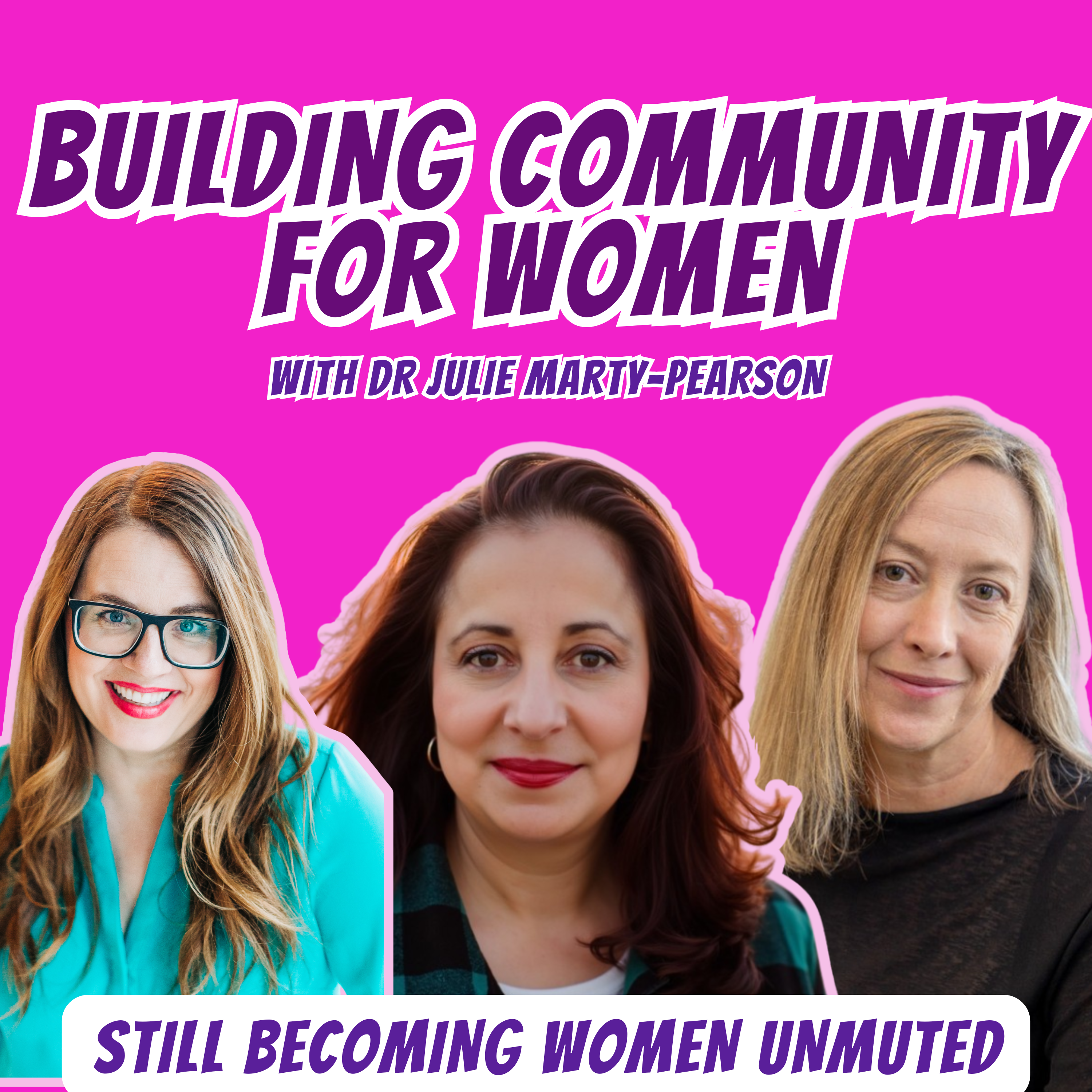
Building Authentic Communities for Women. A panel of women podcasters and entrepreneurs explores what community truly means, its importance in both professional and personal life, and how to cultivate meaningful connections in an increasingly digital world. They share insights on creating inclusive, supportive spaces that foster confidence, collaboration, and growth.


Building Authentic Communities for Women.: The Power of Community in Women Podcasters' Lives
In this episode, a panel of women podcasters and entrepreneurs explores what community truly means, its importance in both professional and personal life, and how to cultivate meaningful connections in an increasingly digital world. They share insights on creating inclusive, supportive spaces that foster confidence, collaboration, and growth.
Most women podcasters and entrepreneurs feel isolated at some point — but what if community isn’t about fitting in, but about creating a space where you’re truly seen and supported? In this powerful episode of Still Becoming Women Unmuted, four inspiring women come together to redefine what community really means and share how it's transformed their lives and businesses.They explore community as a safe landing pad where differences are welcomed, and belonging is rooted in authenticity and mutual support. You'll hear how women are building their own supportive networks from scratch — whether through online platforms, in-person meetups, or collaborative initiatives — and why choosing the right community platform is essential for growth without overwhelm.
This episode breaks down tangible strategies for community-building, including empowering others to lead, creating intimacy in large groups, and nurturing collaboration over competition. They reveal the hidden sacrifices and success stories behind growing communities that sustain, inspire, and amplify women’s voices. Plus, they share surprising insights about the impact of community on confidence, mental health, and business resilience — vital for any woman seeking to thrive in her own space.
Why does community matter now more than ever? Because loneliness is a quiet epidemic, and strong connections could be the game-changer your personal or professional life needs. Whether you’re leading a community, craving one, or simply want to understand the magic behind authentic connection, this episode is your blueprint for building spaces where women can show up as their whole selves, laugh, learn, and grow together.
Key Topics:
- How community alleviates loneliness in online business and podcasting
- Building community intentionally: platforms, growth, and leadership
- The importance of fostering joy and fun within communities
- Navigating challenges like platform fatigue, overwhelm, and community evolution
- The role of leadership and empowering others to sustain community growth
- Balancing virtual and in-person connections for deeper engagement
- Understanding and defining success in community-building efforts
- The impact of diverse perspectives and multiple voices in podcasts and communities
Learn more about the guests in this episode, check out their podcasts:
Amy Stone- The Art of Imperfect Adulting Podcast
Becky Mollenkamp- Messy Liberation Podcast
Julie DeLucca-Collins- Casa De Confidence Podcast
Connect with your host, Dr. Julie Marty-Pearson
Software & Tools
Descript - PodMatch - Podpage - Buzzsprout - RSS.com -
Are you a Podcast Host or Guest or want to become one?
Come network monthly events in the Women's Podcaster Party Networking Community: https://calendly.com/marty-pearson-coaching/podcaster-party
FREE workshops on how to launch a podcast or podcast guesting here: https://www.juliemartypearson.com/events
Join the Membership: https://www.juliemartypearson.com/community
Julie Marti Pearson (0:00): Welcome to Still Becoming Women Unmuted, the podcast. I am your host, doctor Julie Marti Pearson, and I am very excited to be in a virtual room full of amazing women podcasters that I have met through podcasting. And so we are gonna talk about women and community and how and why that is important and even so much more as women podcasters. So I wanna welcome Julie, Becky, and Amy all to the podcast. Thank you for being here.
Unknown Speaker (0:30): Thanks for having us.
Julie Marti Pearson (0:33): So I wanna start with this question because I think the word, the term community is used a lot, and we reference it in a lot of different ways. So let's start the conversation with all of us. What does community mean to you? What does that mean when you hear that term? Julie, let's start with you.
Julie (0:52): Yeah. You know, I think community definitely has a deeper meaning for so many different of us. Right. And for me, is just a place where it's a soft landing place. It's a place where you can find your people.
Julie (1:08): It's an, it's a group that kind of compliments who I am as an individual. We don't have to agree or be the same, but it's a place where there's a role for everyone and everybody contributes. And again, you know, doing business or life alone is very lonely. And many of us know that we can't do it alone. And this is a great place to be able to connect and have that mutual support.
Julie (1:36): Be seen, be heard, be understood, which a lot of us sometimes feel that we're not seen or yet nobody gets us. Community is a place where someone does get us.
Julie Marti Pearson (1:49): Yeah. So much of what you said, absolutely. But I love that you mentioned that community doesn't have to mean you're all the same or you all agree. Sometimes you're finding community, and part of that community is different, and meeting different people and learning different perspectives. But, yeah, I think being an online business owner entrepreneur is very lonely, and we all look for community for that.
Julie Marti Pearson (2:12): But also podcasting can be very lonely, especially as hosts when we're doing a lot of it by ourselves. So Becky, for you as a woman, business owner, an entrepreneur, and a podcaster, what does community mean to you?
Unknown Speaker (2:25): I think Julie said it beautifully. I would just echo that and say that to me, what that really means is belonging. And I think belonging is so important. Spaces where you feel like you can feel some safety to show up as your full self. Again, that doesn't mean that we all have to be the same, but we all have to have some base level of shared values set where we can be in a room and feel safe to be ourselves.
Julie Marti Pearson (2:48): Yeah. That's a really important piece is safety, is belonging. Even if we're different or disagree, it's a safe space. I know I'm not gonna be you know, we have our boundaries, and they're appreciated and agreed to and listened to. I mean, I think that's and it's so much more I think there's another level of that safety for us as women, especially when we're talking about difficult topics.
Julie Marti Pearson (3:12): What about you, Amy? What do you what do you think of when you hear community?
Amy (3:16): So I think that the definition of belonging and being seen is very common. I think that the sensation of being in community feels like an anchor or a tether. And the way I came to that was that anytime I've had a community where I've either left, like you graduate and you lose your academic community, or even if you leave a gym or a club, the feeling of being without that community is that feeling of instability or being untethered or unsure of what your connection to yourself or whatever. Because they can now community can be in a bunch of different things. Like, it used to all just be people we saw in real life, but now you can have a community worldwide that it's your connection and it it's that anchor.
Julie Marti Pearson (4:06): I like that word anchor. I think that's an important one because I think so many of us feel disconnected, feel overwhelmed by the world. Even going on social media can be a hard time these days. That anchor to safety, to belonging, to knowing who you are, to knowing who you can count on, who support you. And I think a lot of what we're talking about is also in business.
Julie Marti Pearson (4:32): It's very scary to start a business. It's lonely. It's you're doing all this work and it's like, is it working? I don't know. Who do I ask?
Julie Marti Pearson (4:40): We need to have those people that we can ask these questions, share these struggles with. Right? And that's something that I have realized very early on in my entrepreneurial journey, but also in podcasting because what I mean, I will be very honest, and I'm sure you all would probably agree with this is I wouldn't be still podcasting if it wasn't for the community of podcasting. Yeah. Absolutely.
Julie Marti Pearson (5:02): And the communities I've found in podcasting. So as a podcaster specifically, what are the ways community have helped you or the the ways you found community so that you do have that support?
Unknown Speaker (5:15): Who wants to go first?
Becky (5:16): I'll go because I've built community. That's generally been, it's funny because I was just talking about this today. There's a quote from James Baldwin in this book I was reading that says The place in which I'll fit will not exist until I make it. And that feels like it's sort of my life's philosophy at this point, which is I'll just build it because it's easier to build it sometimes for me, as somebody who likes to build, than to try and fit myself into the mold of some other community that just isn't quite it. And so when I started podcasting, it was really lonely.
Becky (5:46): I did it for years. I can't even remember how many years, almost a decade before even thinking about community, not realizing, like it just didn't occur to me, Oh, there might be podcasts in communities. And then when I started looking, I just had a really hard time finding a space that felt like what I was wanting, which was really about value set more than anything. So yeah, I built it myself. And what it's given me is encouragement, learning, support, just like venting, and a place to like go and just sort of rest my weary head when I'm feeling overwhelmed or consumed by things, or when I want to quit.
Becky (6:19): The encouragement to keep going. Marketing support as well. But that to me is sort of the, for me anyway, is sort of the bottom of the list. It's more about just having people who, as it is with anything that we do, it's like the idea of just having people who get it. Right?
Becky (6:32): Cause you can, I have wonderful community of friends, personal friends? I have wonderful community family, but these are not people who podcast, so they just don't get it. Try as they might, they don't understand some of the things when I'm talking about sponsorships or downloads or whatever. They don't necessarily understand. And they think of podcasting in the kinds they listen to, which might be an ami polar, and that's not exactly my problems.
Unknown Speaker (6:55): So I just think it's building it for myself and then having a space where I have people who get it that I can just turn to when I want to talk about this thing that not everyone understands.
Julie Marti Pearson (7:05): Right, and I do think what you said is so important. I think it's so important to women in general. For me, it's always been like, I have a husband, we've been married twenty years, been together almost thirty, but my career was in higher ed. He never went to college a day in his life. So one, he didn't understand the world I was working in, let alone what I was dealing with.
Julie Marti Pearson (7:27): And there were probably sometimes he probably couldn't explain to you what I did, but that's okay. But I knew that he couldn't give me that support. I couldn't come to him with questions in that world, and I can't in podcasting. So a lot of what you're talking about, Becky, is us finding the people that are doing what we're doing or trying to do what we're doing and can be that person to ask a question or voice a frustration. And I think that's what a lot of us are seeking, and so all of us have kind of created it for ourselves too.
Unknown Speaker (7:53): What about you, Amy?
Amy (7:55): So I think that you hit on something there, Julie, when you were describing your situation because there is a phenomenon when I talk to women and specifically during life transitions in women where you can be surrounded by people and yet have the sensation of being isolated alone. You can be very, very busy and people can really need you, but you may not feel supported or like people understand you. And it's a really, really weird thing. And I think that that's what drives a lot of us to seek community specific to creating things. It's tough work to come up with an idea and then put it out into the world for other people to see.
Amy (8:38): It feels a lot like turning your skin inside out because you're putting it out there and people are gonna read it and listen to it and watch it. And if you're lucky, people are gonna tell you what they think about it. But that sense of having anybody else who is along the ride with you is there. So my sense, my search for community and podcasting in 2015, I felt like community lived inside Facebook groups. It was easy to find people inside that magic little meta universe.
Amy (9:14): And then in 2025 and 2026, I really feel like we're at a turning point, where what community looks like, how we find it, how we evaluate it, is transitioning. Because we all happily leapt into the Zoom rooms in 2020, and that's not what most of us are looking for these days. And, you know, we've changed how we communicate with people. We've changed how we make connection. None of us are the same person that we were in 2020 or in 2015.
Amy (9:46): And so I will be honest and say that I have been assertively and aggressively looking for communities in person and online for the last year. And I found some great things. Found Becky's community is fantastic. I'm in it. I love it.
Amy (10:02): I support it. I'm not in the hunt for any more Zoom rooms where people popcorn around the room and introduce themselves in little sound bites. I think they're fantastic. It's not this is not a dig on them. But I really think that because we are no longer restricted for meeting in person, that the challenge for me moving forward is not just meeting new people and finding out what they do, because that is fun and I love it and I'm an extrovert, but it's the challenge of where do we find people who are actually working on similar projects together?
Amy (10:35): Not just showing up to blast the space with their sales ad or, you know, hey, you do this for me. Not transactional type stuff necessarily, although transactional stuff absolutely has its place. But where are the communities where we can make actual connections and develop true collaborations, joint partnerships, and things that we are working together to grow as people, friendships, women, creators, podcasters, residents of the planet, you know, all of again, who's gonna walk your dog when you're out of town? Who's gonna run your meetings when you have the flu? Those are the type of things that are a little bit harder to find, and much more important as we grow.
Unknown Speaker (11:19): I love that.
Julie Marti Pearson (11:21): Yeah, I think that's so true. I definitely see a downtick in the online community activity. I'm seeing it even within my own free networking community. People are just not coming, aren't responding as much. I think maybe we're a little oversaturated in the online community, and we're all a little tired of what you said, Amy, those Zoom rooms where everybody introduces themselves, but there, it's transactional.
Julie Marti Pearson (11:45): There's no real deep connection being formed. And so I think we're all kinda like, where else can we find it? We don't want it on Facebook because I don't wanna look at Facebook today. We don't want it here or there. Right?
Julie Marti Pearson (11:56): So a lot of us are kind of evolving in what we're looking for and how to search for it and how to find it.
Amy (12:02): Oh, and there's one more thing I'll throw into the list of that I don't want any of. I do not need to be in a Slack room with 5,000 people. I love Slack. Slack is a fantastic product, but there's a point, and I don't know where it is. There's a number where it switches magically from being fantastic to being the worst thing that's ever happened.
Unknown Speaker (12:22): And it's just like, oh no, no, no, no, no,
Unknown Speaker (12:24): no, No.
Unknown Speaker (12:25): No. You pointed at that, Julie. So what do you have to say?
Unknown Speaker (12:29): You know, I I have to say
Unknown Speaker (12:32): Here in Key West, we were out before it was in. In this open and inclusive paradise, you can be yourself, make new friends, and savor our live and let live vibe. With LGBTQ plus friendly accommodations, our legendary nightlife, and year round activities and events, it's always a good time to come as you are. Key West, close to perfect, far from normal. You're listening to a podcast right now, driving, working out, walking the dog?
Unknown Speaker (13:06): If you're into podcasts, chances are you have something to say too. With rss.com, starting your own podcast is free and easy. Upload an episode and we distribute it to Apple Podcasts, Spotify, Amazon Music, and more. Track your listeners, see where they're from, and start earning from ads just like this. If you've been thinking about starting a podcast, this is your sign.
Unknown Speaker (13:27): Start your new podcast for free today at rss.com.
Unknown Speaker (13:31): I am probably in six, seven different slack groups that I get added to. And if this is where people have their communities is very difficult for me. And I think that this is the thing, right? Community has to feel easy. It cannot be something that you have to like, oh God, I have to go in and fill in the blank, go out of that Facebook group, go into the zoom chat and you know, introduce yourself with the same spiel every time I can't go into the slack where, okay, who the heck are these people?
Julie (14:06): Right. And I think that that loses the intimacy that can be in community. And it doesn't mean that intimacy means a small community because you can have that within a large group of individuals that are coming together. But I think the one thing that we have to look at when it comes to community for women, it has to meet us where we're at. And it has to be just not only accepting in the place where we can land or the place where we have like mindedness or learn from other people that are may be different from us, but it has to be a place that we it's a no brainer.
Julie (14:46): Right. And I think that for me, right again, what people will say, oh, you know, join my thing. And it's on, it's on, it's on circle. Join my thing. It's in slack.
Unknown Speaker (14:56): Join my thing. And I don't even know, like, I don't even know where to go. Right. Listen, we have to find the different places that work for us as community builders to host these. But at the same time, we cannot make it overwhelming for other people because if it's one more thing to do, then that individual is not getting anything out of that group.
Julie (15:20): That individual is not getting the benefits of belonging, which is really what community should be about. And again, I think we, as someone who, you know, from time to time suffers from FOMO, I do want to be in everywhere, but I, I need to also be intentional. And I think that we need to make the decision. What is intentional for us? How does that translate to the communities that we belong to?
Unknown Speaker (15:46): In what places do we just say, you know, that's not for me. Listen, you invite me into community and WhatsApp. You'll never see me because it's not my thing. I just can't. So I think that's the other piece of the puzzle too.
Julie Marti Pearson (16:01): And I think that is the hard part, both from the perspective of a participant, but also as a builder. It's like choosing the platform when there are 20 different ones we could choose from. And they all do different things, you know, school, Slack. I can't even think of all the ones at this point, but I was thinking of my head as we're talking Right. Exactly.
Unknown Speaker (16:21): Right. List. Yep. No. We Teach your book.
Unknown Speaker (16:23): Do that.
Unknown Speaker (16:24): Circle.
Unknown Speaker (16:25): Yes.
Unknown Speaker (16:25): Heartbeat. What are the others?
Unknown Speaker (16:27): Well, hadn't heard of that.
Unknown Speaker (16:28): Telegram. Telegram, Discord.
Unknown Speaker (16:30): Oh my gosh.
Unknown Speaker (16:31): Discord. Oh, yeah. Yeah.
Julie Marti Pearson (16:33): Too much. Mean, and some of us have our our organizations in multiple places. Like I talk about it here and there and there. And I was thinking as you guys were talking, there's like seven or eight groups I'm a part of, whether it's a free or a paid, that I also then get email notifications every sign something happens within the platforms too, which it's like I already have enough email. But we're still all coming to community for a reason and we're all still seeking it despite the technology and the semantics of how that is created.
Julie Marti Pearson (17:04): And I think we've talked about, you know, safety, belonging, And I know for me in creating it, it was seeing what I couldn't find. So kinda like what Becky mentioned that, you know, sometimes as creators, it's what we know we need or want and it doesn't exist or at least we haven't found it. And so for me, you know, a couple years ago, She podcast still existed. And I went to their one day event that was attached to Podfest a couple years ago, and that was great. But then that was like the last thing they kinda did before it really went away.
Julie Marti Pearson (17:37): And I'm like, we need this. We need this space for women. And we can get it in a lot of different ways and in no way is mine perfect. I'm actually, you know, changing it myself. But I think a lot of it is the safety, is a place to go to speak your mind or ask a question.
Julie Marti Pearson (17:52): One of the I often say is I want a place where women can come and ask questions they think in their head, this is a stupid question. I shouldn't say it. But there's no stupid question because we all don't know what we don't know, and we all have a starting point. So for all of you, both as podcasters but as community leaders, what are those things that you look at or try to understand in either creating or growing an existing community? Where where are the struggles happening?
Julie Marti Pearson (18:18): I mean, we already talked about the tech piece and where to land, but there's other struggles in community building. Becky, where have those struggles been for you in creating and also growing your existing community?
Unknown Speaker (18:32): Well, one of I just, to speak to some of what's been said, and I think kind of also speaks to this, one of the things I think we have to remember too, is like, you can't be everything to everyone, and you're never going to be. So when we think about community building, I mean, you know, consumerism has us believe, capitalism has us believe that we're supposed to grow a giant community and make all the money. But like, for all the reasons I think Julie and Amy both mentioned, that's not really about community anymore. That's just about transaction, about money. And so if you're truly concerned about community and the ways that we've been talking about it, which is relational and deep and intimate and all of that and safe.
Becky (19:07): You're not looking for massive numbers and you can't be everyone to everyone or everything to everyone. Sometimes you just have to like say this is. I'm going to use Slack and I'm going to use Zoom. For people who are just like, I've got Zoom fatigue. I don't like Slack.
Becky (19:22): This just isn't the community, right? And I think sometimes we get scared about that because we're like, I don't want to alienate anyone, but you have to just kind of pick your lane and then stick in it. And you know, unless you're so hyper specific that you're only talking to like brown eyed, left handed, you know, baseball playing whatever, like, you know, like if you're that specific, you may struggle. But for most of us, there are 8,000,000,000 people on this planet. Like there are enough people that are gonna align with the way you show up and are interested in the same things you do.
Becky (19:51): And so just really speaking to those people and having that kind of clarity and then knowing what you're not, I think is important too. Because I mean, with challenges, that's often the one that shows up for me because we all breathe these capitalist waters and they still get into me too thinking like, oh, I need to make more money. I need to get more people and growth, growth, growth. And then trying to remember, wait a minute, what's my actual goal here? What's the actual aim?
Becky (20:16): And instead of trying to be everything to everyone, how do I make sure that I continue to serve the people that I really want to serve in the way that serves them, but also honors me, right? Ultimately I'm the one building and running the thing. So as much as like, you know, maybe Julie doesn't like Slack. Maybe if I love Slack, then I just have to say, you know what? I love Julie.
Becky (20:36): I'd love to have her in my space, but maybe this just isn't the right space. And that's okay because then maybe Amy comes along and says, you know what? I actually love this tool. And it's like, Then this is a fit. It doesn't mean that I don't want to be in community with Julie, just maybe not this community.
Becky (20:49): And I think that's an ongoing challenge where we often start to think, gosh, this decision might turn off this person. And we have to remember, there's enough people. There's enough people, and you'll find them if you keep showing up authentically for you.
Julie Marti Pearson (21:02): And that, I think, is probably the hardest part. And that's why I have a free community and a paid community, and I struggle with both for different reasons. But I think what you said is so important. As people, as community builders, as podcasters, we are not for everyone. Not everyone is gonna like what we have to say here.
Julie Marti Pearson (21:21): Not everyone's gonna like what I say in my own podcast. You know, we have that there's a level of letting go you have to have as an entrepreneur, as a business owner, right? Not everyone's gonna like you. You're not for everyone. And there are so many communities, not every community is right.
Julie Marti Pearson (21:37): But it is going back to doing what you need and what you want. And you know that some people need and being true to that, but there's also that purpose behind it. Building a community to make money versus building a community to build community. You can do both, but it also, there's different reasons, right? So there's that balance too, I think.
Unknown Speaker (21:58): Yeah. One of the things that I did wanna mention, and I think that this is a point that people miss a lot when it comes to community in, of course, you know, I think it's in our DNA as women. We think we have to do it all. And I think the most successful communities are the ones in which the leader or the founder decides and says, this is my community, but it's also somebody else's community. And let me empower others to replicate me, right?
Julie (22:25): Be the person who welcomes people, be the person who creates maybe a different conversation because I think that when we try to do it all, we're always going to come up short. And when people join our communities, they may not necessarily be ready to jump into a chat with a bunch of women in zoom. But if someone is hosting maybe one to one coffee chats, they'll be more comfortable with that. And really, you look at the most successful communities, they're the ones in which the person who has started and founded the community then begins to create that inner circle. Then that inner circle becomes a layer of leaders or welcomers or people who then create these subsets within the community that support others, because then the person who started the community doesn't have to be checking in on everybody.
Julie (23:21): Doesn't have to be answering. Doesn't, and not that to say that that's not part of what a founder's responsibility is within a community. But if the community is to grow, it gives the space for others to then bring in their genius. That may be a piece missing within the community. And that's what creates a better community when we give somebody else the chance to pick up the torch and keep going.
Julie (23:47): Right. And I think that that's really key.
Unknown Speaker (23:49): Oh my gosh. I love what you just said in my head. I'm like, oh my God, I could do this. I gotta do it. Like, I just thought of people in my community that I could say, Hey, why don't you come in this month and teach this around what you do?
Julie Marti Pearson (24:00): And I think we all, I think every one of us builds community because of that. We want to empower more women. We all have a purpose in having more women do their thing to share their story, own their voice, podcast, grow, whatever it is. But sometimes we get held up in the way it's supposed to be versus wait, I get to decide how it is.
Amy (24:20): So there's one thing that hasn't come up yet that I'd love to throw onto the pile. And that is that I think that the communities that stick the longest, there is an element of joy and fun, you know, s'mores at the campfire. When you go to the girl scout thing, there might've been a bunch of other things that were a lot of work, but s'mores make it better at the end of the day. And the other thing that I see a lot of, because community has become a community has become a buzzword that sometimes is a very pretty marketing message on top of making people do the work for a company. So back in the old days, if you needed tech support, you called and you asked somebody a question that gave you an answer.
Amy (25:06): Today you join the forum for XYZ software company and you post it to the forum and another person in the community gives you an answer, right? That's crowdsourcing the thing. And that kind of a community, it is a community and I'm not throwing them under the bus at all. Like they can be very, very effective and I love them absolutely. But the communities that I am going to give to and grow with, I think that there's definitely a thing where the benefit of the community is solidly for the people who are in the community.
Amy (25:39): And that can mean a thousand different things, right? That can be a joke a day email that makes you smile in the morning, really. You know, it can be very, very simple. But there are many, many people, you know, community is a buzzword, loneliness epidemic, all of those things. There are people out there who wanna monetize loneliness and friendship.
Amy (26:03): That
Speaker 5 (26:04): You're listening to a podcast right now. Driving, working out, walking the dog. If you're into podcasts, chances are you have something to say too. With rss.com, starting your own is free and easy. Upload an episode, and we distribute it to Apple Podcasts, Spotify, Amazon Music, and hundreds more.
Speaker 5 (26:24): Track your listeners, see where they're from, and start earning from ads like this, even with just 10 listeners a month. If you've been thinking about starting a podcast, this is your sign. Start free at rss.com.
Unknown Speaker (26:38): You're listening to a podcast right now, driving, working out, walking the dog. If you're into podcasts, chances are you have something to say too. With rss.com, starting your own podcast is free and easy. Upload an episode and we distribute it to Apple Podcasts, Spotify, Amazon Music, and more. Track your listeners, see where they're from, and start earning from ads just like this.
Unknown Speaker (27:00): If you've been thinking about starting a podcast, this is your sign. Start your new podcast for free today at rss.com.
Unknown Speaker (27:07): That is a crazy thing, but it's there. It's out there. I don't have to tell you guys. You see it as much as I do. If I'm going to sign up to your Super Saver community, what's in it for me?
Amy (27:22): You know, like there has to be a coupon or a joke or a place to go. I used to be a part of, a company that, not a company, a community that actually failed shortly after the, pandemic. And we had these in person meetings once a month and we got together and they had speakers and all of these things. I was consistently being reprimanded for talking with my friends in the back of the room. This is a problem in my life.
Amy (27:43): It's I was like this in class too. It's me. It's definitely me. But I learned that I'd go outside. I'd take my friends and take my conversation outside.
Amy (27:50): Other people, and that's what, Becky was saying. It can't be all things to all people. And people are there looking for different things. And when we take the joy out of the community, because I think that when you're building a community, it can be very easy to get invested in that, all right, more meetings, more education, more of this, more of this, the list of things that we're doing for people. And it's very, it's so easy to have that little thing get lost.
Amy (28:16): Like people want that, you know, one moment of joy in a forty five minute meeting is the thing that makes the difference. Know? It's like, you know, the single so we should all sing it and join hands and sing along. No.
Unknown Speaker (28:27): I'm kidding.
Julie Marti Pearson (28:28): Let's see. Or And I think what you're saying is some of what you're talking about is how do you define success for a community? Or how do you define a community being a successful place for you in terms of what you're looking for? But also as a community leader, and I'm sure you've all felt this is feeling like no one's coming, no one's showing up. What am I doing wrong when it's more of like, they just have too much going on today or tomorrow or, and so there's also this from the back.
Julie Marti Pearson (28:57): It's like you're constantly questioning it, even though you know the answers to some of why it's happening. And so I think there is a struggle from a participant in finding community, but also as a host in how it, how do I know if this is the right community for the people that exist in it, and how much do you change it for them, or how much do you stick to what is good for you, and the right people will find it. Right? So I think there's so many layers to a lot of what we're talking about.
Julie (29:22): Yeah. You know, I have a friend, and I love this conversation because I think that some of the most, meaningful and deep relationships in my life now as a 50 year old came from the women that I met through this community. And I, met the, the person who founded the community and were friends and she had a group of 15 of us, 15 of us that, where I'm gonna date myself. We were in some forum on the weight watchers, the groups. Right.
Julie (29:56): And then she, she, she would write the blog, but then she would also say, Hey, who needs help? And then she started to, we would go on, a zoom back in 2009 and she would teach us how to, how she would prep her food. Right. She was just showing us how to prep her food from the 15 of us. Then all of a sudden she started a Facebook group and it was 40 of us.
Julie (30:23): And from the Facebook group, that was the place where you went to celebrate. That was the place where you went to ask a question. That was the place where you, found, you know, hey, I have something really funny, to discuss. I remember when my dad died. I mean, this is the group now back then in 2014, the group had grown to about 300 people and still, you know, there was a main core group, but that was the place where I could land and, and had nothing to do with my dad, but it was a place where I could talk about this and be accepted and seen.
Julie (31:01): The group fast forward. The group has 11,000 people on it last checked. And she has done such a great job at creating a tight knit community because she then saw that, Hey, the community is going to evolve. The needs are going to change. And yes, I've empowered other people, but I also, where do I meet people where they're at?
Julie (31:26): How do I do that in creating the opportunities for people to then participate as little or as, or as much as they want, but still keeping the feel of something intimate, something that is the place where you belong. It's going to be key, but you can write, build something big if that's where you want to go. But understand that there might be some people that may not come along for the ride. And it's fine because not everybody stays in your life for a lifetime. People come for a season and be okay with knowing that people sometimes outgrow.
Julie (32:06): Now I will tell you this community, do I pop in there every day like I used to in twenty ten, eleven? No, not really. I don't always, but I always know that, Hey, if I want a resource, if I want to chat with someone, I can. And one of the things that my friend has, you know, encourage is, you know, the offshoots of this community. I started my coaching and my business became successful because those community members then became part of my community.
Julie (32:40): And that's going to be something that it's, it's a lesson for all of us be okay with knowing that it's not about the competition, it's collaboration. And at times that collaboration means that you go separate ways too.
Julie Marti Pearson (32:54): I think that's very important because I think a lot of us, especially women have a hard time cutting ties, even if we know it's better for ourselves, both personally and professionally. But it's okay. But also one of the things I've definitely learned as a coach, as a business owner, as a podcaster, evolution is gonna happen whether you like it or not. We're all evolving. All have to, in some ways to change with what the world is changing.
Julie Marti Pearson (33:20): I think we see that a lot in podcasting. Like, even the five years I've been in it is vastly different today than it was when I started in terms of how to start, how to do it, all those things. And so I think the community piece has evolved a lot. And with that evolution, a lot of us are seeing the desire ourselves and in others to get more in person again. Because, yes, this online space is great, and I've made so many amazing connections and friends through it, but there is nothing like being in the room with people.
Julie Marti Pearson (33:51): And so I think we're seeing a little bit of this now. What are what are your experience with that feeling, that shift, or even yourself wanting it? Let's start with Amy.
Amy (34:00): I'm the I'm the worst person to start. I like I okay. Julie knows this. I am an extrovert, and I learned that I was an extrovert in 2020 when we went into lockdown after the pandemic, which seems like a funny thing. Right?
Amy (34:13): But I've always been a creative. And so I've always done projects that were like me writing or me editing or whatever, solo projects. So if you would talk to me in like 2018, I would have been like, no, I like am fine by myself, blah, blah, blah, blah. True. True.
Amy (34:27): But when you take the people away, I get a little crazy. And I love Zoom and connecting on things, but I was, I became very hyper attuned to the fact that even if I talk to people on screen every single day, by the end of the day, I was like, need some people were like, need to go touch grass. I was like, I started talking to strangers in the neighborhood. I was like strong arming my family and being like, you must talk to me. Like I need people.
Amy (34:51): So from like whatever, whenever we were allowed out of our cages, I was flying to where people would, you know, do in person things. And now very much I'm highly motivated. But it's this weird thing, this very weird thing where I am almost more likely to fly to Los Angeles than I am to drive across town for a happy hour. Like it's this very strange thing that I'm like, I'm like, you know, I'm 52. I'm not super into happy hours anymore.
Amy (35:20): Right? Like, if you invite me to like a happy hour mixer, I'm like, what's the traffic situation? Is there parking? You know, right? Meanwhile, I will like hop on a train and go to Orlando or fly to California or, you know, these kind of things.
Amy (35:34): And so I'm, I'm very motivated to be in person and I'm looking for things that are fun. I do think it's a really weird thing because I hear it from other people and I represent it myself. We're looking for these unicorn things where there's a wonderful combination of online connection and convenience and also spectacular in person opportunities to do the things we want. And we all want it, but I will also say as an organizer, okay, well, you know, that's a lot to ask from any kind of organization. It's just, you know, so that's where I am.
Unknown Speaker (36:11): You know, there we go. Amy, the extrovert has spoken.
Becky (36:14): Well, I'll just bring the exact opposite perspective because I am an introvert and 2020 proved to me just how introverted because I actually was like, I need the people in my home to leave because this is not isolated enough for me. It was too much peopleing because I had people in my home and I'm like, I could never get any alone time during the pandemic. And I was like, Okay, I am really introverted. And Zoom for me is perfection. I think for introverts, it's like it gives me peopleing without the intimacy of peopleing that can be very hard for me sometimes.
Becky (36:48): I also have discovered, I think with perimenopause, the older I get, the less I want to be around people, just in general. So like, I'm and again, that's where it's like, you gotta do what works for you because I'm not going to build a community of in person things because I don't want to do it. It would drain me. It would drain the life out of me. I could probably sell it.
Becky (37:09): I don't want to do it. And so I just have to trust that there's enough people who like me, either because of necessity or because of the same desire I have, are willing to show up to Zoom meetings still, right? And I think there are enough of those and that's okay. But again, you gotta do what you got, what's right for you.
Julie Marti Pearson (37:26): And I also think that the virtual is not gonna go away now that we know how easy it is and how convenient it is and so many things. But kinda like Amy, I'm not so much about my local, like, like the events. I'll go to San Francisco. I'll go to drive to LA. Luckily, I live in a state where I can go to a lot of different places very easily, but I am an introvert.
Unknown Speaker (37:45): That's where I get my energy, is alone, is one on one. My husband and I do not have kids. Our house is very quiet and that is how we like it. Like, we actually will go somewhere and come home and be like, thank God. Like, that was a lot of noise and a lot of light and a lot of people.
Julie Marti Pearson (38:01): And it's but that doesn't mean I can't turn it on. And I do love I have found that when it's right, that energy in person is needed. There's a collaboration, a connection that you can't get through the virtual. Right? And so I know I do need that a few times a year, but I also know that when I leave the house now, I'm like, this is too much peopleing.
Julie Marti Pearson (38:20): This is too much peopleing for me. I need to go home. So what what about you, Julie? How how is that balance for you?
Julie (38:26): You know, I am definitely an extrovert through and through, and I get charged by people. And I, the older I get though, to Becky's point, I do find that maybe I'm not as keen as to staying up all night. So I think it's about, you know, finding the right balance. And I know that we don't usually like to use that word, but it is about saying, you know, what is it that I need today? And sometimes, you know, I'm in zoom from 10:00 to 05:00 and I'm okay with that.
Unknown Speaker (39:05): And sometimes I'm like, no, I need to go and sit at a Starbucks with my girlfriends and really figuring out when you need that. And for me, because I do like people, I do try to find the opportunities in which I'll say, Hey, you know what? I haven't seen my girlfriends in a while. Let's go to a spa together. Or I haven't been to, you know, an event in a while.
Julie (39:27): Let me go ahead and start planning. When is my next retreat that someone is putting out? Or when is it that maybe I can, you know, go across town and see the women that are business, you know?
Speaker 5 (39:40): You're listening to a podcast right now, driving, working out, walking the dog. If you're into podcasts, chances are you have something to say too. With rss.com, starting your own is free and easy. Upload an episode, and we distribute it to Apple Podcasts, Spotify, Amazon Music, and hundreds more. Track your listeners, see where they're from, and start earning from ads like this, even with just 10 listeners a month.
Speaker 5 (40:07): If you've been thinking about starting a podcast, this is your sign. Start free at rss.com.
Unknown Speaker (40:14): Ladies. And I'm going to go network, but I think that you have to sort of figure out where are the places that you want to be and figure out when is the right time for you to do it. And also most importantly, when is the right time to kind of just sit at home with a book and not talk to anyone, you know, like you, I'm, I'm a childless, double income, no kids. And my husband and I really got into our routine. We don't have a kid now, but we have an elderly parent living with us.
Julie (40:44): And I find that, wait a minute, I need, need some solitude because I'm not used to having someone around me all the time. Right? So really this is where community provides me with maybe the opportunity to talk to like minded individuals and also walk away and have a little bit of solitude as I go out, as I get myself together to not always be in the same spot.
Amy (41:09): Yeah. Just wanna wanna touch base on it. I just wanna clarify that my opinion as a person who has a lot of kids and they have friends and all of those things, There is a giant difference between the peopleing that comes with small people who are like, mom, mom, mom, mom, mom, mom, mom, mom, or the caregiving, whatever the version of that is, and the spa day with girlfriends. I'm an, I am an extrovert, but like, at the end of the day with my kids, I was like, all right, so if you touch me again, we're gonna have a situation.
Julie Marti Pearson (41:47): And I think that's so true because we all have it in different ways. Like, as Julie was talking, I was thinking, you know, none of our parents live with us, but my 80 year old mother is twenty minutes away and his parents are twenty minutes the other way. And, you know, we are the, being the child free people, we are the ones that step in in a lot of ways for the parents because other people have other things. And so there is this element of balancing all of it, whatever the demand is, kids, parents, spouses, for me, a lot of fur animals. But it's also, I think Julie had said this, but as you were talking about, I was thinking about, you know, I saw this person I follow was writing a book.
Julie Marti Pearson (42:25): She's an animal advocate. I love her. And she's coming to LA for a book signing. And there was no question of if I had enough money, if I should do this, but I went and bought the ticket so that in two months, I have something to look forward to for a night. Even though I'm going by myself, it's still gonna be a public outing and something I'll get to interact with like minded people.
Julie Marti Pearson (42:45): And sometimes it is that. It is having that thing ahead of that we can look forward to, that we know we get to do certain things during, and that can be a part of that, finding that community, finding the places that will bring us joy and will help us and whatever that may be. And I think that the in person piece of that is as podcasters, we can do a lot of it virtually and that's what's great and that's what we love. But even as podcasters, we need that connection with other podcasters once in a while. And that's why we have all been at different times to Podfest because it's one of those places where it's very community and you feel like you can just walk around and talk to all your friends.
Julie Marti Pearson (43:23): I call it my pod family reunion. But there are other organizations and other events that can do that for us too. One that I have joined that has both in person and virtual is the New Englanders podcast community, which I love. And so we can create it in different ways, whether it's local or just where somewhere everybody can come. I think we've talked about a lot of what we've seen, what we've experienced, what we'd like, and maybe what we also don't like.
Julie Marti Pearson (43:49): But the big takeaway is find the right community for you. Not everybody is gonna be the right fit, and not every community is gonna be right for you, but find what works for you. And I think I know we only have a little bit of time left. I wanna kinda come back to each of you maybe sharing a little bit about ways people can connect with you, with your podcast, your communities if you have one, so that, you know, maybe you're the right place for the community that they have been looking for. So I will start with Julie.
Julie (44:19): Yeah. So thank you so much for having me, Julie. So always fun to hang out with your community and ladies that surround you. I have to say, you know, for me hanging out in community is the women that have come into my life for one reason or another. I have the Confident You community and that's part of the individuals that work with us, either with myself for business strategy or with the CASA to Confidence Productions, which my husband leads, we find that we have become a group of individuals who collaborate and there's no hierarchy, right?
Julie (44:56): There's someone who is leading in different ways and we're finding ways to collaborate with that person and we create the space to lift each other up, to amplify each other's message, to share some of the best resources that we have so that we can all be successful. That can be, you know, anytime that anybody wants to join, they can just let me know, Hey, I'm looking for community and then you can come hang out with us. I host, networking events. I also host a Monday, coworking spot that even if you're not an official client, can come and hang out Mondays, 11AM Eastern time. And we get our work settled for the week.
Julie (45:36): We kind of plan out and this is a great place for you to connect with other people if you're looking to find other like minded individuals. My podcast is Casa de Confidence, which is not to be confused with Casa de Confidence Productions, and that's my main podcast in which I interview some fantastic individuals and both of you have been a part of it. And we share your journey to confidence and, you know, what is it that you do to make a difference in this world And how did you get here so that you can inspire others that may be sitting in the sidelines thinking, oh, I don't know if I could ever do that. I did start a solo podcast and it's a daily podcast called brave moves daily. And then I committed to doing it for a year.
Julie (46:20): And the reason I started this podcast is because many people tell me, oh, your husband, he does all the editing or you've been podcasting for a long time and you have a successful podcast. You don't know what it is to start a new, and I wanted to show people that you have to just take the lead, do it imperfectly, and you can do it. And I'm also learning ways in which if someone is not looking to have someone edit their podcast or support them in that, I can, you know, share the wisdom that I learned by doing this on my own. And that's brave moves. So those are my two shows.
Julie Marti Pearson (46:53): I love that. And I think, you know, you mentioned confidence and I think that is a through line for a lot of us in podcasting, especially women that we've found some of our confidence through podcasting, through guesting, but we're also finding ways to inspire other women to find their confidence and to build it. And the community is a part of that. We're using community to build up our own and others' confidences too. Yeah.
Julie Marti Pearson (47:16): So I'm so glad you were able to be here, Julia, and thank you for having me on your podcast in your communities as well. Amy, what about you?
Unknown Speaker (47:25): Yay. Me. My favorite topic. Me. All right.
Amy (47:29): So my name is Amy Stone. I'm the host of The Art of Imperfect Adulting. So that's my podcast that, streams on YouTube and it's available on all of the audio platforms. I talk to women, adults, not all women, but, a lot of women about the choices they've made and impact those choices and decisions have had on the path of their lives. I love it.
Amy (47:50): It's the best thing I do. I encourage people to tune in. And if you have a story to share, which everyone does, reach out. Let me know if you'd like to be a part of the show. And I have been in the process of talking to women creators, people who are out there in the process of creating things like newsletters and YouTube channels and podcasts about community, because I'm very, very curious about it.
Amy (48:16): And specifically, one of the things that I miss from earlier times in my life is that collaborative workshop environment, which I've had with other creators in the past. And so I'm talking to people about that. So if you are a person who's out there who is making a podcast, making a YouTube channel, writing a book, you know, filmmaking, there's a lot of ways you can be a creator. Right? And you wanna talk to me about that.
Amy (48:42): I set myself a goal, not quite as ambitious as Julie's goal of 100 daily live podcasts, but, I have a 100 conversations and I'm about a quarter of the way through. So I'm actively doing them.
Unknown Speaker (48:53): And you are also actively about to start potentially a separate live streaming experience.
Unknown Speaker (49:00): Yeah. That's all in. You can I tell can I talk about That's so much fun? Love that I'm doing it. That's the spin off of my, like, women's creators.
Amy (49:07): It's like the thing. Like, I think that, so I'm having conversations, these live stream events. We've done one hard, like elbow Julie, and she came and did it with me. The second test the second test is this next week. And so it's a live stream and I bring women creators in and we talk about a topic.
Amy (49:23): So last couple of weeks ago, talked about, awards, podcast awards, which was hilarious and so much fun. And this coming on the tenth, we're talking about what is a podcast? That question that bounces around the world. And so, the, yeah, I think that it's fantastic because these are conversations that are happening in a lot of places in, to be really, really blunt, I think we can all admit that a lot of places these conversations happen are in tables that are surrounded by predominantly men. If we're going to pick at that, we're going to find that those are predominantly English speaking men with not a lot of tan in their skin.
Amy (50:01): There are women for sure. Right? But I don't often see women who are a room full of women. And then even when there is, because there are some, right? Those are going to be celebrities or professionals.
Amy (50:12): And the issues with, you know, launching a production or creating a production are a little different. A little, little tiny, itty bit different if you're Reese Witherspoon or if And you're Amy so, you know, I think there's space for these amazing conversations from the people who are in the arena or the trenches, if you will.
Julie Marti Pearson (50:34): Yeah. And I agree. And I think that's why I've realized even in this podcast still becoming, it's be it's becoming more panels because I've realized that some of these conversations do need more than one or two perspectives. And I'll still be doing some solos and some interviews, I'm sure, but I think there's a depth in this panel of having multiple women with multiple perspectives on a topic. And I all the panels I've had so far, especially the chronic illness, when we were like, after we're like, we need to do this every week.
Julie Marti Pearson (51:03): We need to do that for ourselves just to have people to share and talk to that understand that, that one thing that we're, we're focused on, which, you know, chronic illnesses is a whole other thing, but so is podcasting. Ing is changing every single day. We need a space for women to talk about that and experience it and share and support each other. So I think what you're doing is great, Amy, because you are talking about things a lot of us talk about individually. What is a podcast?
Julie Marti Pearson (51:29): How do I answer that when someone asks me that? Or, you know, what are podcast awards? Like, we talked and had a crazy fun conversation about. I think it's so important to create those spaces and to create them for women because we still are the minority. There are only only, like, 35% of active podcasts are hosted by women, and women hosted shows have more women guests.
Julie Marti Pearson (51:50): Male hosted shows have more predominantly male guests, which means we are also less in guesting. So we need more of us because we need more voices. We need more different voices. And I think that's why we all love podcasting, and I don't think Becky's gonna make it back. So I'm gonna briefly say, Becky Mellencamp, thank you for being here.
Julie Marti Pearson (52:10): And if you wanna learn more about her, check out her community, the Feminist Podcast Collective, which will be linked in the show notes. And definitely follow her and her and I'm blanking messy liberation, I think, is the name of her podcast. I apologize. I should have had that in front of me. But I wanna thank all of you for being here and kind of sharing your perspectives.
Julie Marti Pearson (52:32): I know that the listeners got something worthwhile from it, and hopefully we will all come back soon and have another discussion. But thank you for being here and being a part of me.
Unknown Speaker (52:43): Thank you, Julie, for hosting this. This was so good.